






What's Happening?
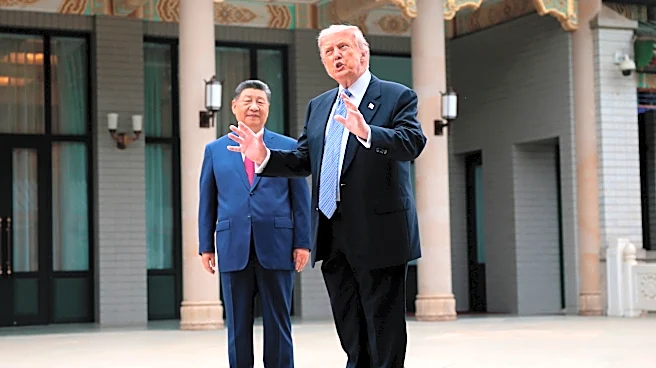
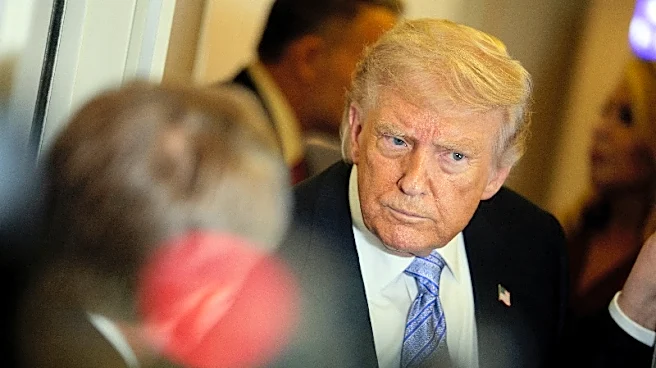
President Trump has expressed pessimism regarding the release of Jimmy Lai, a prominent Hong Kong democracy campaigner, following discussions with Chinese President Xi Jinping. Lai, a 78-year-old British citizen, was sentenced to 20 years in prison under
a security law imposed by Beijing. His arrest in 2020 was part of a broader crackdown following significant anti-government protests in Hong Kong. During a recent visit to China, President Trump raised Lai's case with Xi, who described it as a 'tough one.' Despite Trump's efforts, he reported that the response from Xi was not positive, leaving him not optimistic about Lai's release. Lai's family and supporters had hoped for U.S. intervention to secure his freedom, citing his deteriorating health as a significant concern.
Why It's Important?
The situation underscores the complex diplomatic relations between the U.S. and China, particularly concerning human rights issues. Jimmy Lai's case has drawn international attention, highlighting the tensions surrounding Hong Kong's autonomy and the enforcement of Beijing's security laws. President Trump's involvement reflects the U.S.'s ongoing commitment to advocating for democratic principles and human rights. However, the lack of progress in securing Lai's release may impact perceptions of U.S. influence in international human rights advocacy. The case also serves as a reminder of the challenges faced by pro-democracy activists in regions under strict governmental control, potentially affecting global diplomatic strategies and human rights policies.
What's Next?
While President Trump has expressed his commitment to advocating for Lai's release, the path forward remains uncertain. The U.S. may continue diplomatic efforts to negotiate Lai's freedom, potentially involving other international allies. Meanwhile, Lai's legal team and family are likely to persist in raising awareness about his condition and advocating for his release. The international community may also increase pressure on China to address human rights concerns, potentially influencing future diplomatic engagements. The outcome of this case could have broader implications for U.S.-China relations and the global discourse on human rights.
Beyond the Headlines
Jimmy Lai's imprisonment and the international response highlight the broader issue of press freedom and the suppression of dissent in regions under authoritarian rule. Lai, a media tycoon, was a significant figure in Hong Kong's pro-democracy movement, and his case exemplifies the risks faced by journalists and activists in similar contexts. The situation raises ethical questions about the balance between national security and individual freedoms, as well as the role of international actors in advocating for human rights. Long-term, this case could influence global standards and policies regarding freedom of expression and the protection of political dissidents.