



What's Happening?
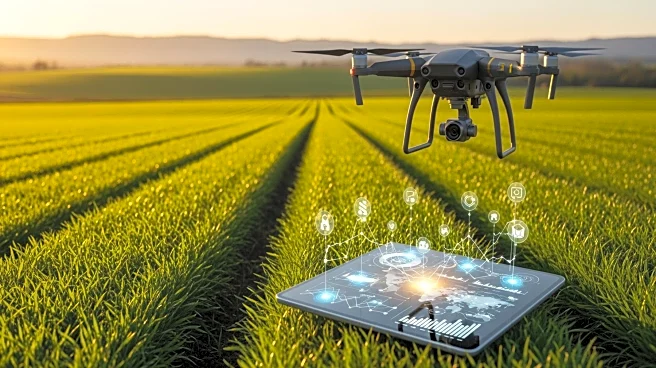
Pakistan's agricultural sector is undergoing a digital transformation aimed at improving farm performance and resilience. This shift involves integrating data-driven decision-making, connected value chains, precision input use, and technology-enabled
services. The transformation is driven by the need to address challenges such as climate volatility, water stress, soil degradation, and market uncertainty. Digital tools, including mobile-based advisories, satellite weather feeds, and precision farming technologies, are being used to provide timely guidance to farmers, improve yield stability, and reduce input waste. The transformation also includes the digitalization of agribusiness value chains, enhancing transparency, traceability, and efficiency.
Why It's Important?
The digital transformation of agriculture is crucial for building climate resilience and improving productivity in Pakistan's agricultural sector. By enabling farmers to make informed decisions based on real-time data, the transformation helps reduce vulnerability to climate and market shocks. It also supports sustainable agricultural practices, aligning with global development and climate frameworks. The integration of digital tools into farming practices can lead to higher output with lower environmental costs, contributing to food security and economic stability. Additionally, the transformation enhances financial resilience by expanding access to digital financial services, improving credit and insurance options for farmers.
Beyond the Headlines
The digital transformation in agriculture also has significant implications for farmer well-being, reducing psychological stress associated with farming risks and improving long-term planning capacity. However, challenges such as rural connectivity gaps, limited digital literacy, and gender disparities in technology access remain. Addressing these barriers through coordinated policy support and public-private partnerships is essential for ensuring inclusive and effective digital transformation. The shift from ownership to access, facilitated by service-based delivery models, is also critical for expanding access to advanced precision technologies among small and medium-sized farms.