






What's Happening?
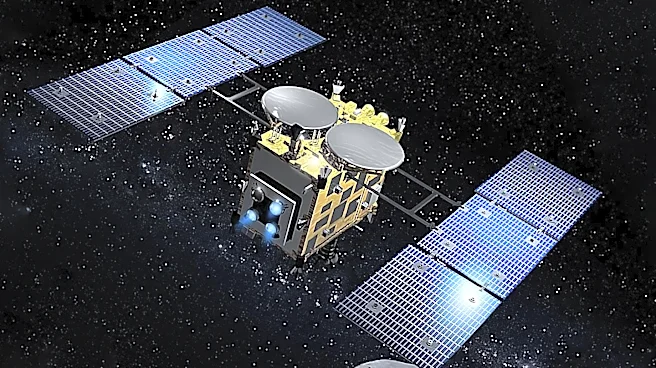
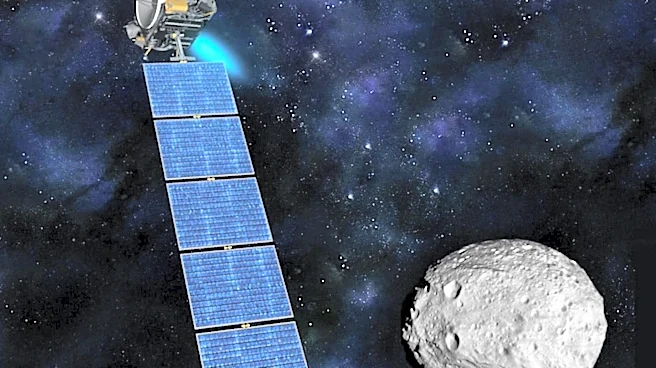
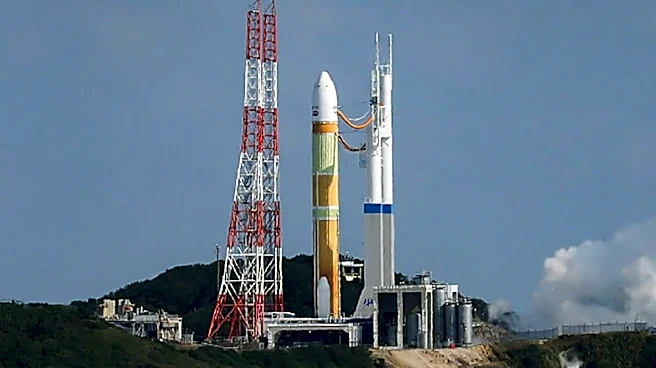
Japan's Hayabusa2 spacecraft, initially launched in 2014, is set to embark on a new mission targeting the asteroid 1998 KY 26. After successfully completing its primary mission of returning asteroid samples in 2020, the spacecraft has been assigned to investigate
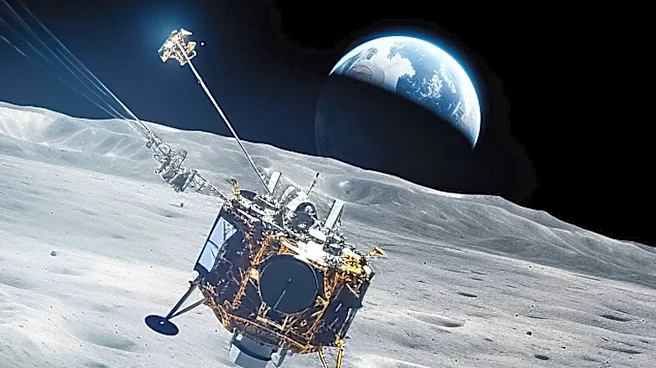
this small, 11-meter diameter asteroid. The mission is scheduled for July 2031, following two more flybys of Earth. Despite the spacecraft's aging sensors and depleted ion engines, the mission aims to enter orbit around the asteroid, deploy a target marker, and attempt a landing. This mission is expected to provide valuable data on planetary defense and enhance understanding of asteroid varieties.
Why It's Important?
The Hayabusa2 mission is significant for its potential contributions to planetary defense strategies. By studying the asteroid 1998 KY 26, scientists hope to gain insights into the composition and behavior of small celestial bodies that could pose a threat to Earth. The mission also underscores the durability and adaptability of space technology, as Hayabusa2 continues to operate beyond its original mission parameters. The data collected could inform future missions and strategies for asteroid deflection or mitigation, which are crucial for protecting Earth from potential impacts.
What's Next?
The next steps for Hayabusa2 involve careful planning and execution of its flybys and eventual rendezvous with the asteroid in 2031. The mission will require precise navigation and coordination to overcome the challenges posed by the spacecraft's aging systems. Scientists and engineers will continue to monitor the spacecraft's condition and make necessary adjustments to ensure mission success. The findings from this mission could influence future space exploration and planetary defense initiatives.