
What's Happening?
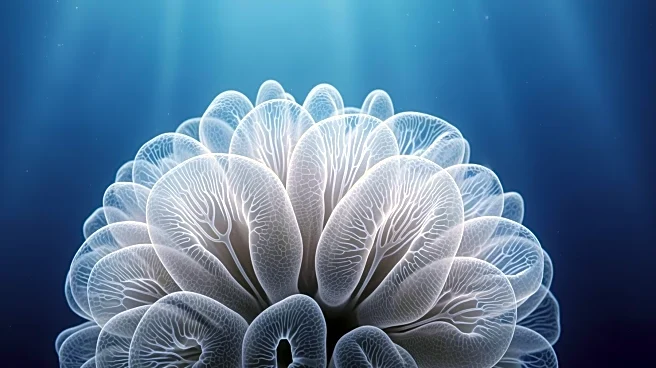
Researchers at the University of Vienna have discovered that sea anemones, part of the Cnidarian phylum, use a body-forming technique similar to bilaterians, which include humans. This technique, known
as bone morphogenetic protein (BMP) shuttling, is used to form body structures and is a trait that likely evolved before the evolutionary split between Cnidarians and bilaterians, estimated to have occurred 600 to 700 million years ago. The study, published in Science Advances, suggests that this mechanism is ancient and may have been present in a common ancestor of both phyla.
Why It's Important?
This discovery provides significant insights into the evolutionary history of body formation mechanisms in animals. Understanding that such a fundamental biological process is shared between vastly different organisms like sea anemones and humans highlights the deep evolutionary connections across the animal kingdom. This could impact evolutionary biology by offering a new perspective on how complex body structures evolved and diversified. It also underscores the potential for ancient biological mechanisms to inform modern scientific research, possibly influencing fields such as developmental biology and genetics.