




What's Happening?
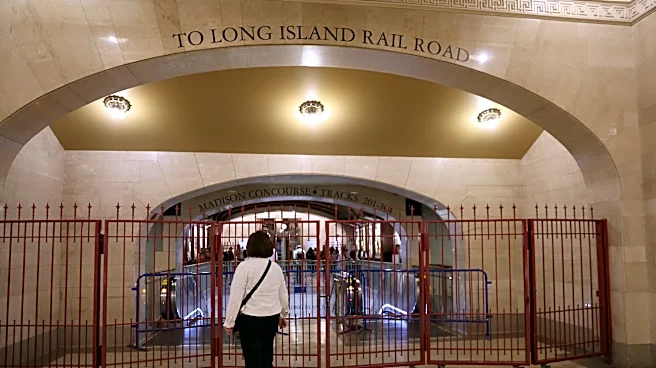
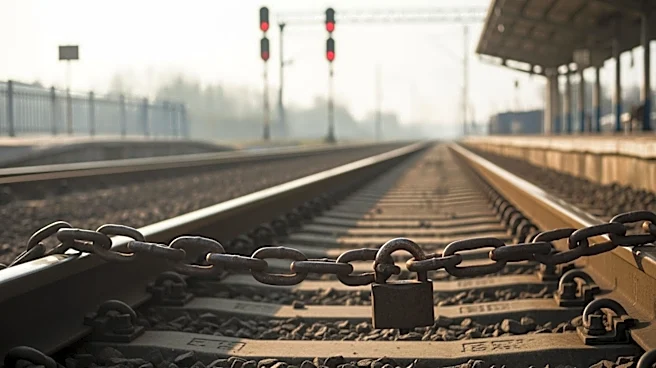
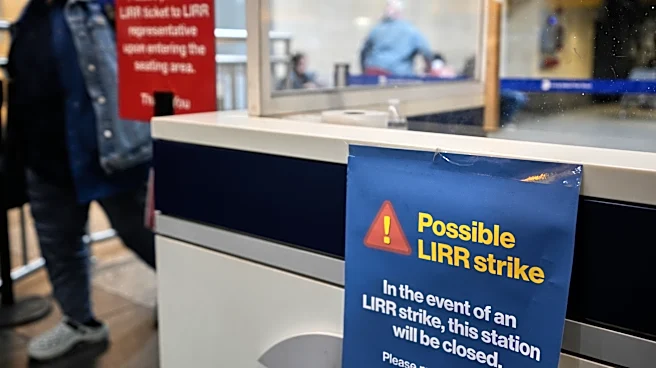
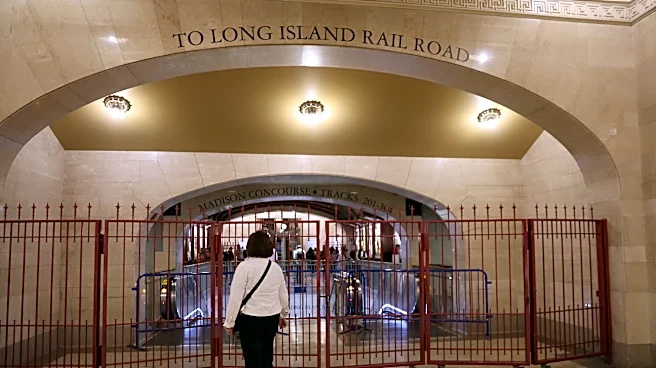
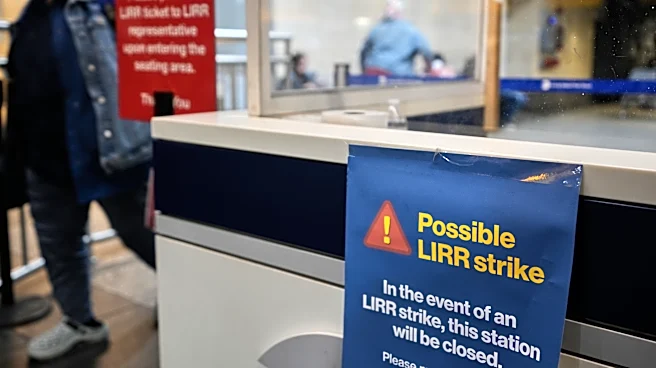
The Long Island Rail Road (LIRR) strike has halted all train services, affecting over 200,000 daily riders. The strike, involving approximately 3,500 union workers, is the first since 1994 and has been caused by stalled contract negotiations with the Metropolitan
Transportation Authority (MTA). Key issues include salary increases and healthcare provisions. The strike has disrupted travel plans for many, including sports fans and commuters, and has led to increased traffic congestion as people seek alternative transportation. Despite the impact, no new negotiations have been scheduled, and the unions remain firm in their demands for fair wages.
Why It's Important?
The strike highlights significant labor relations challenges within the public transportation sector. The disruption affects not only daily commuters but also the broader economy, as increased traffic congestion can lead to delays and reduced productivity. The strike also raises questions about the sustainability of current labor practices and the need for fair compensation in the face of rising living costs. The outcome of this strike could influence future labor negotiations and public transportation policies, particularly in balancing worker demands with budgetary constraints.
What's Next?
With no new negotiations scheduled, the strike's duration remains uncertain. The MTA has implemented limited shuttle bus services, but these are not expected to fully accommodate the usual ridership. Governor Kathy Hochul has called for union leaders to return to the bargaining table and has encouraged remote work where possible. The potential for federal intervention remains, as the strike's impact on the region grows. The resolution of this strike will be closely watched, as it could set a precedent for future labor disputes in the transportation sector.