
What's Happening?
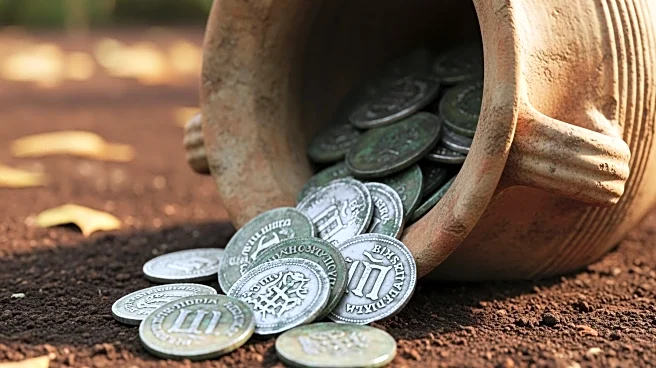
An archaeological excavation in a French village has led to the discovery of a jug containing 40,000 Roman coins, believed to date back between A.D. 280 and 310. The coins were found during a dig conducted
by experts who have analyzed the dates on the coins, suggesting that this treasure was buried approximately 1,700 years ago. This significant find provides insight into the economic and historical context of the Roman Empire during that period. The discovery was made by a team led by Simon Ritz from Inrap, a French archaeological research institute.
Why It's Important?
The discovery of such a large cache of Roman coins is significant for historians and archaeologists as it offers a tangible connection to the economic practices and societal conditions of the Roman Empire. This find could provide valuable information about trade, currency circulation, and economic stability during the late Roman period. Additionally, it highlights the importance of archaeological efforts in uncovering historical artifacts that contribute to our understanding of past civilizations. The coins may also attract interest from collectors and museums, potentially impacting the cultural heritage sector.