




What's Happening?
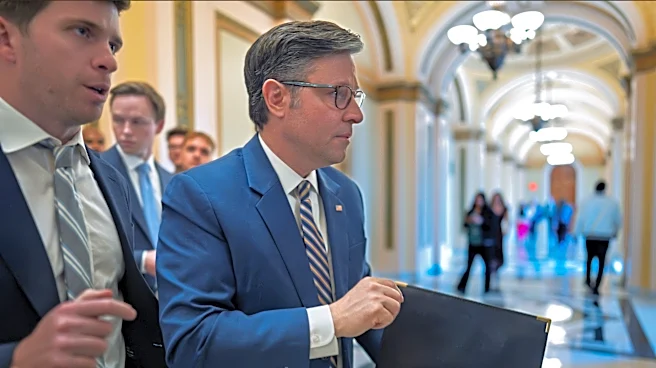
Speaker Mike Johnson, a Republican from Louisiana, has successfully advanced the Safeguarding American Voter Eligibility (SAVE) America Act in the House of Representatives. This act is part of a larger $95 billion budget bill and aims to implement election
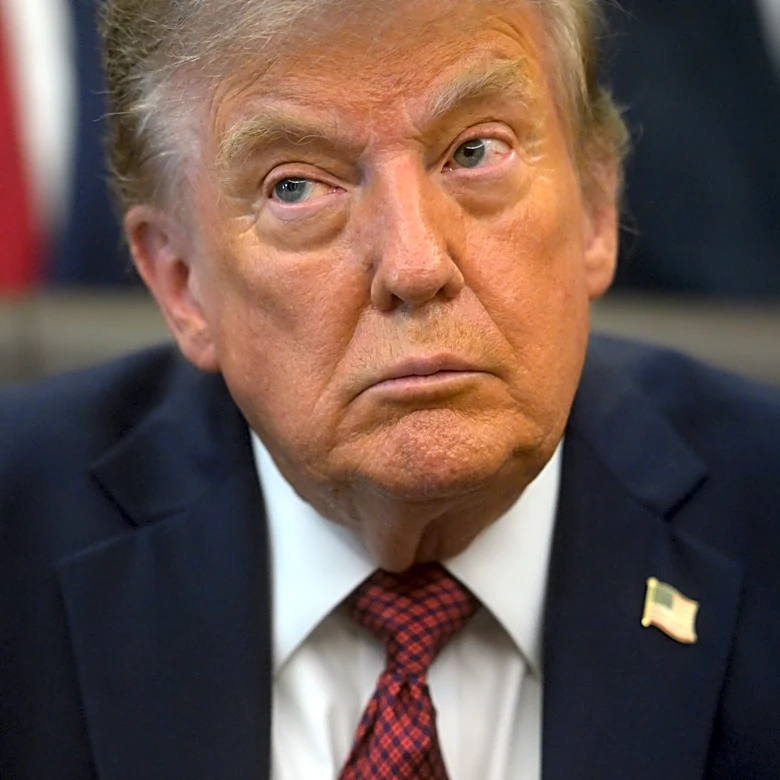
reforms championed by President Trump. The House Republicans are utilizing budget reconciliation to bypass Democratic opposition, allowing the bill to pass with a simple majority rather than the usual 60-vote threshold in the Senate. The bill includes measures such as federal voter ID rules and proof of citizenship requirements for voter registration. Despite facing opposition from some within his party and all Democrats, Johnson managed to secure a narrow 216 to 214 vote in favor of the framework.
Why It's Important?
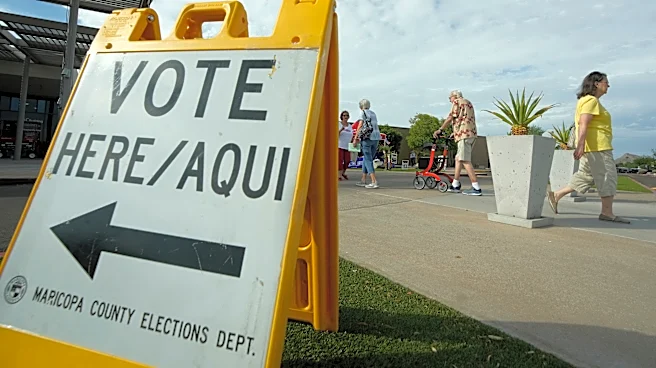
The advancement of the SAVE America Act represents a significant political maneuver by the House GOP to implement election reforms without Democratic support. This move could reshape the electoral landscape by imposing stricter voting requirements, which proponents argue will enhance election integrity. However, critics, including Democrats, view these measures as potential voter suppression tactics. The bill's progress underscores the deep partisan divide over election laws and could influence future electoral processes and voter turnout. The use of budget reconciliation for such reforms also highlights the strategic legislative tactics employed by the GOP to achieve their policy goals.
What's Next?
The next steps involve the House and Senate passing identical versions of the budget bill before it can be signed into law by the President. The narrow margin of support in the House suggests that any defections in the Senate could jeopardize the bill's passage. Additionally, the bill's provisions will likely face legal challenges from opponents who argue that they infringe on voting rights. The outcome of these legislative and legal battles will have lasting implications for U.S. election laws and the balance of power between political parties.