



What's Happening?
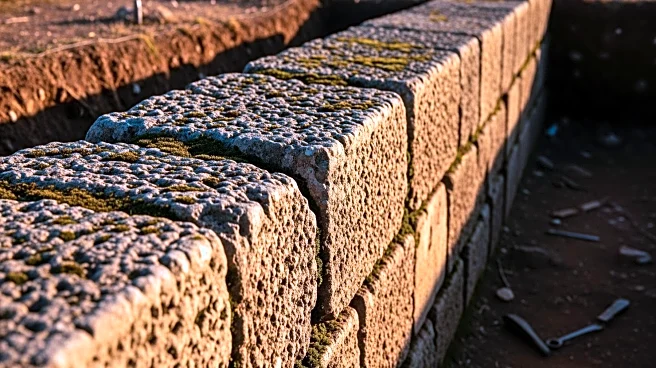
Archaeologists have uncovered one of the longest and best-preserved sections of Jerusalem's Hasmonean-period city wall at the Tower of David Museum. This fortification, built in the late second century BCE, was revealed during excavations for the museum's
new Schulich Wing. The wall, identified as the 'First Wall,' extends over 40 meters and is about 5 meters thick. It was originally over 10 meters high, though only the lower courses remain. The discovery includes signs of intentional destruction, raising questions about historical events that led to its dismantling.
Why It's Important?
This archaeological find provides tangible evidence of Jerusalem's historical significance during the Hasmonean period. It offers insights into the city's ancient fortifications and the political dynamics of the era. The wall's discovery enriches our understanding of Jerusalem's past, contributing to the cultural and historical narrative of the region. It also highlights the importance of preserving archaeological sites, which serve as crucial links to our shared heritage. The findings may influence future archaeological research and conservation efforts in Jerusalem.
What's Next?
The Tower of David Museum plans to preserve and display the wall section, allowing visitors to view it through a transparent floor. This initiative aims to enhance public engagement with Jerusalem's history. The museum's new wing, funded by the Schulich Foundation, will feature artistic interpretations of the city's heritage. Further archaeological investigations may be conducted to explore additional sections of the wall and related artifacts. The discovery could also prompt discussions on the preservation of other historical sites in the region.