



What's Happening?
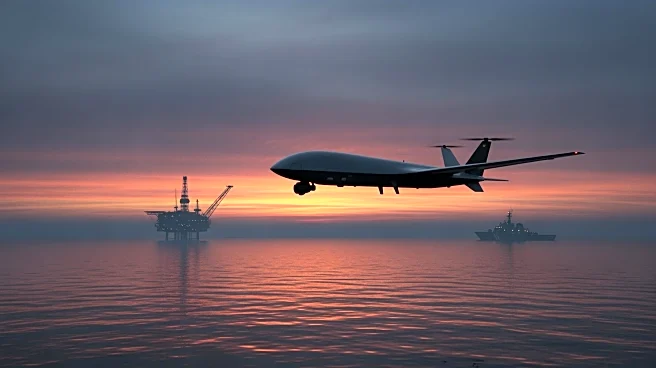
Ukraine's Special Operations Forces (SOF) have successfully executed a drone strike on a Russian patrol ship and an offshore oil platform in the Caspian Sea. The operation took place on the night of December 19, as confirmed by a post on Telegram by the SOF on December 20.
The targeted vessel, a Project 22460 'Okhotnik' class patrol ship, is designed for maritime border security and patrols. Additionally, the SOF drones struck the Filanovsky oil drilling platform, a significant asset owned by Russian company Lukoil. This platform is crucial for oil and gas production and export, contributing significantly to Russia's economy and war funding. The extent of the damage to the platform and its operational capacity is still under assessment.
Why It's Important?
This development underscores Ukraine's strategic use of drone technology to counter Russian military aggression. By targeting key Russian assets, Ukraine aims to disrupt Russia's economic resources that fund its military operations. The Filanovsky platform's role in oil and gas production makes it a vital target, as it directly impacts Russia's economic stability and war financing. The successful strike on the patrol ship also highlights Ukraine's capability to challenge Russian maritime security, potentially altering the dynamics of naval operations in the region. These actions could lead to increased tensions and further military engagements between the two nations.
What's Next?
The immediate consequences of these strikes may include heightened military responses from Russia, as it seeks to protect its assets and maintain its economic interests. Ukraine's continued use of drone technology suggests a shift towards more asymmetric warfare tactics, which could influence future military strategies. The international community may also respond, potentially leading to diplomatic discussions or sanctions aimed at de-escalating the conflict. Monitoring the situation will be crucial as both nations navigate the implications of these targeted strikes.
Beyond the Headlines
The use of drones in modern warfare represents a significant shift in military tactics, emphasizing the importance of technological advancements in conflict scenarios. This development raises ethical and legal questions about the use of unmanned systems in warfare, particularly concerning civilian safety and international law. The long-term implications could include changes in global military policies and the development of counter-drone technologies as nations adapt to this evolving threat landscape.