



What's Happening?
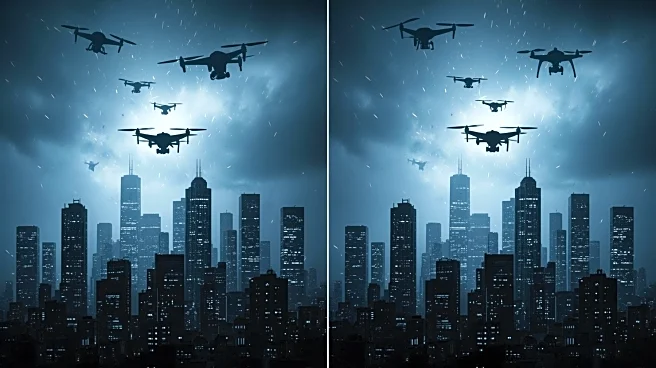
In the final days of 2025, widespread blackouts have been reported in both Ukraine and Russia due to intensified drone strikes. The Moscow region experienced outages affecting over 100,000 people, attributed to an automatic shutdown at a substation, coinciding
with a major drone barrage. In Ukraine, Russian drones targeted residential buildings in Odesa, injuring at least five people, including three children, and disrupting heat, water, and power supplies. Ukraine's grid operator, Ukrenergo, has implemented rolling blackouts across most regions, citing recent Russian strikes that have severely damaged energy infrastructure. Recovery efforts are ongoing but are challenged by continued attacks and infrastructure damage.
Why It's Important?
The blackouts highlight the severe impact of the ongoing conflict on civilian infrastructure and daily life in both Ukraine and Russia. The disruption of essential services like electricity, heat, and water during winter exacerbates the humanitarian crisis, particularly affecting vulnerable populations. The strikes on energy infrastructure are part of a broader strategy to weaken the opponent's resilience and morale. The situation underscores the escalating nature of the conflict and the potential for further destabilization in the region, with significant implications for international relations and security.
What's Next?
Efforts to restore energy services are underway, but the extent of the damage and ongoing attacks pose significant challenges. The international community may increase diplomatic pressure to de-escalate the conflict and provide humanitarian aid to affected regions. The situation remains volatile, with potential for further military actions and retaliations. Monitoring developments in the conflict will be crucial for understanding its trajectory and potential resolutions.