
What's Happening?
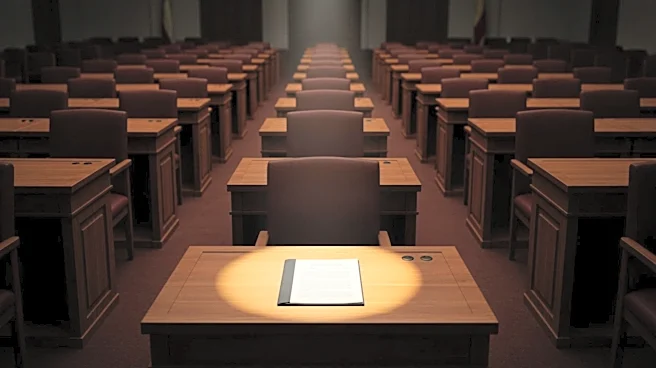
Americans' disapproval of Congress has reached a record high of 86%, according to a recent Gallup poll. This level of disapproval ties the previous record and comes as the Department of Homeland Security
faces a prolonged shutdown, now in its 10th week. Historically, peaks in congressional disapproval have coincided with government shutdowns or threats thereof, such as the 2013 closure and a near-shutdown in 2015. The current disapproval may also be influenced by Republican frustration over stalled legislation, including the Safeguard American Voter Eligibility (SAVE) Act, and broader tensions related to the U.S. conflict with Iran. Additionally, ethics scandals involving two members of Congress have contributed to the negative public sentiment. Congress has struggled with low approval ratings since 1974, with the current approval at just 10%, slightly above the all-time low of 9%.
Why It's Important?
The high disapproval rating of Congress reflects significant public dissatisfaction with the legislative branch, which can have far-reaching implications for U.S. governance and policy-making. Persistent disapproval may hinder Congress's ability to effectively pass legislation and address critical issues such as healthcare, the economy, and national security. The current political climate, marked by partisan divisions and legislative gridlock, could exacerbate public frustration and erode trust in government institutions. This environment may also impact upcoming elections, as voters seek representatives who can break the stalemate and address their concerns. The ongoing government shutdown further highlights the challenges Congress faces in reaching consensus on key issues, potentially affecting public services and the economy.
What's Next?
As Congress grapples with low approval ratings and public discontent, lawmakers may face increased pressure to resolve the Department of Homeland Security shutdown and pass critical legislation. The upcoming election cycle could see shifts in congressional representation if voters seek change in response to the current dissatisfaction. Additionally, the resolution of ethics scandals and the handling of international conflicts, such as the situation with Iran, will likely influence public perception of Congress. Lawmakers may need to prioritize bipartisan cooperation and transparency to rebuild public trust and improve their approval ratings.