
What's Happening?
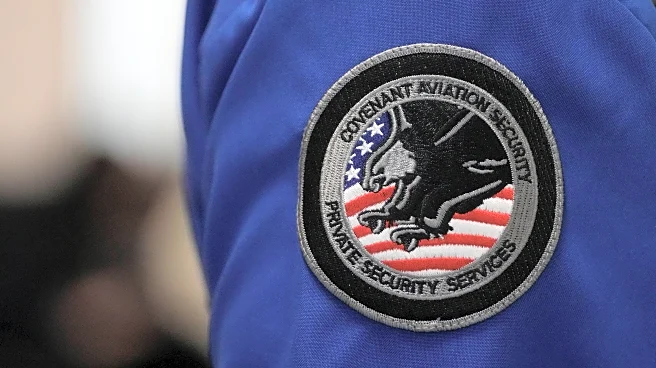
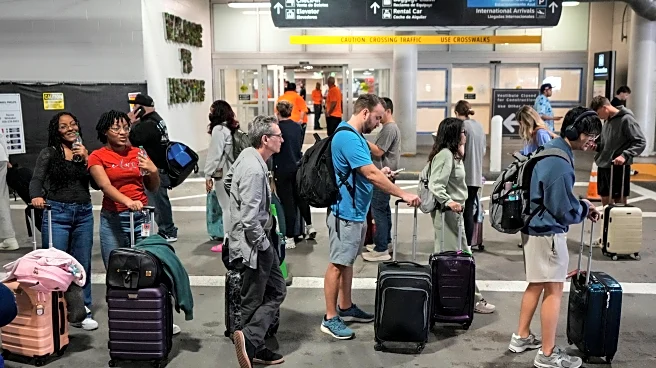
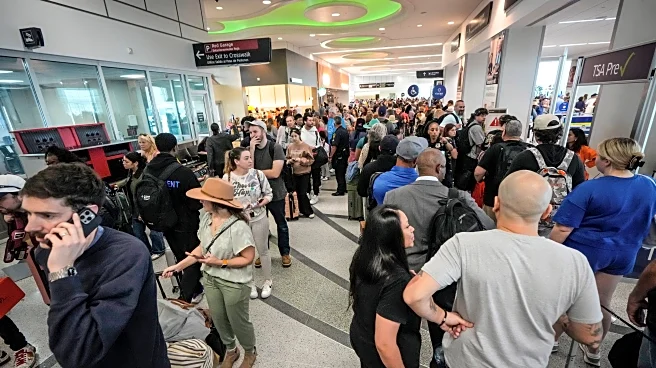
Travelers at Houston Hobby Airport and Louis Armstrong New Orleans International Airport are experiencing significant delays due to long TSA security lines, with wait times reaching up to three hours. This disruption is attributed to a partial government
shutdown, which has resulted in TSA agents working without pay. The situation is exacerbated by the spring break travel surge, leading to increased passenger volumes. While these two airports are the most affected, other airports like George Bush Intercontinental and Hartsfield-Jackson Atlanta International Airport are also experiencing longer than usual wait times, though not as severe. The Department of Homeland Security's funding lapse is a key factor, and there are speculations that the chaos might be a strategic move to pressure lawmakers into negotiations.
Why It's Important?
The prolonged wait times at airports highlight the vulnerabilities in the U.S. air travel infrastructure, especially during peak travel periods. The situation underscores the critical role of TSA agents in maintaining airport security and efficiency. The financial strain on TSA agents, who are working without pay, could lead to increased absenteeism, further exacerbating the problem. This disruption not only affects travelers but also has broader economic implications, potentially impacting tourism and related industries. The situation serves as a reminder of the interconnectedness of government operations and public services, and the potential ripple effects of political stalemates on everyday life.
What's Next?
If the government shutdown continues, more airports could experience similar disruptions as TSA agents face financial hardships. The U.S. Travel Association warns that nearly 50,000 TSA agents will miss their first full paycheck soon, which could lead to further staffing shortages. Congress is under pressure to resolve the funding issue to prevent further chaos. Travelers are advised to plan for longer wait times and arrive at airports earlier than usual. The situation may prompt discussions on how to better safeguard critical services from political impasses in the future.