



What's Happening?
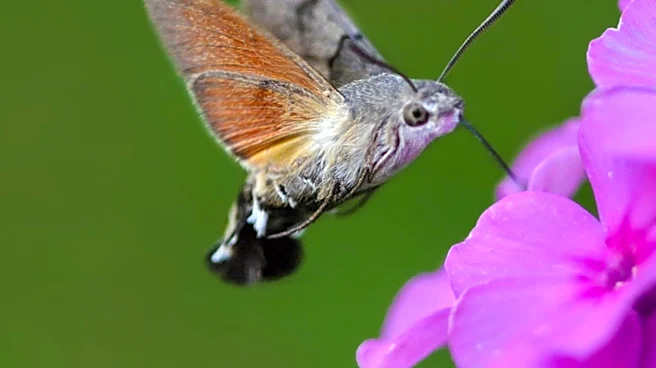
A recent study published in the Journal of Experimental Biology has discovered that tobacco hawkmoths (Manduca sexta) can use their wings to detect smells. Conducted by scientists in Germany, the research found that the moths' wings contain receptor proteins
capable of sensing different odors. The study involved clipping the wings' edges and using electrowingography to confirm the presence of odor receptors. The wings were found to detect specific organic compounds, suggesting that the sensory hairs across the wings play a crucial role in the moths' ability to smell.
Why It's Important?
This discovery adds a new dimension to our understanding of insect sensory capabilities, particularly in moths. The ability to smell with their wings could have significant implications for how these insects interact with their environment, including plant pollination and habitat selection. Understanding these mechanisms can aid in the development of pest control strategies and enhance our knowledge of ecological interactions. The study also highlights the potential for further research into the sensory functions of insect wings.