







What's Happening?
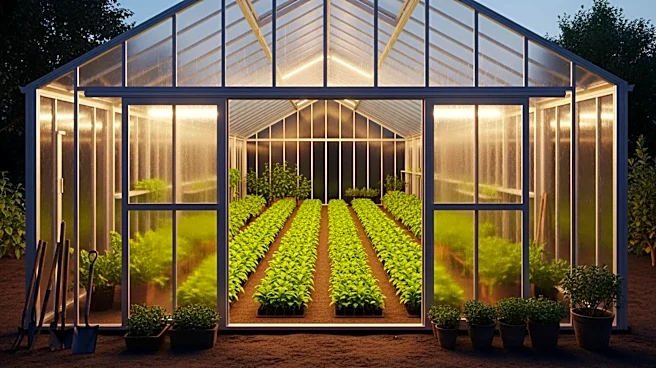
Lutheran Services in Iowa (LSI) has inaugurated a permanent greenhouse for its Global Greens program, which supports immigrant and refugee farmers. The new facility, located at the former Dogpatch Urban Gardens site, provides a stable space for farmers to
start their plants from seed. This development comes despite a significant reduction in federal funding, including cuts from the U.S. Department of Agriculture grants that previously supported the program. The Global Greens initiative helps refugees and immigrants grow food and start businesses by offering greenhouse space and agricultural training. The program also operates a farmers market and participates in initiatives like Double Up Food Bucks to support local produce sales.
Why It's Important?
The establishment of a permanent greenhouse is crucial for the sustainability of the Global Greens program, especially in light of recent federal funding cuts. By providing a stable and predictable environment for farming, the initiative supports economic self-sufficiency among refugees and immigrants, offering them a pathway to entrepreneurship. This development highlights the importance of local and community-driven solutions in the face of fluctuating government support. The program not only aids in food production but also contributes to urban agriculture, showcasing how such initiatives can thrive in metropolitan areas.
What's Next?
With the new greenhouse, LSI aims to expand its support for refugee farmers, potentially increasing the number of participants and the scale of operations. The program's success could attract additional funding from private donors or local government initiatives. As the farmers gain more experience and resources, some may transition to independent farming operations, further contributing to the local economy. The program's model could serve as a blueprint for similar initiatives across the country, promoting sustainable agriculture and economic integration for immigrant communities.
Beyond the Headlines
The Global Greens program addresses broader social and economic issues, such as integration and empowerment of refugee communities. By providing agricultural training and business development opportunities, the program helps participants build a sense of community and belonging. It also raises awareness about the potential of urban agriculture to contribute to food security and sustainability. The initiative underscores the role of nonprofits in filling gaps left by government funding, highlighting the need for diverse support systems for vulnerable populations.