


What's Happening?
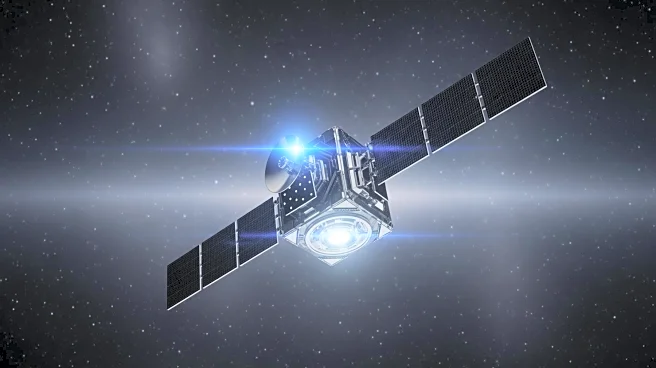
NASA's TRACERS mission, which launched on July 23 from Vandenberg Space Force Base, has commenced preliminary science data collection. The mission involves two satellites, Space Vehicle 1 and Space Vehicle 2, designed to study magnetic reconnection in Earth's
atmosphere. Space Vehicle 2 is fully operational, while Space Vehicle 1 faced communication issues due to a power subsystem problem. The mission team has reoriented Space Vehicle 1 to maximize sunlight exposure, allowing it to collect data despite its battery issues. The focus has shifted to Earth's southern polar cusp to optimize data collection.
Why It's Important?
The TRACERS mission is crucial for understanding magnetic reconnection, a process that affects space weather and can impact Earth's power grids and communication systems. By studying how particles from space interact with Earth's atmosphere, scientists aim to better predict geomagnetic storms and other space weather phenomena. This research is vital for the safety of astronauts and the integrity of technological infrastructure on Earth. The mission's success in overcoming initial technical challenges demonstrates NASA's capability to adapt and continue valuable scientific exploration.
What's Next?
The mission team will continue to develop a new operational plan to fully commission the instruments on Space Vehicle 1 within the current constraints. As both satellites collect data, the team will assess the impacts on the mission's science goals and adjust strategies to ensure comprehensive data collection. Ongoing updates and findings will be shared by NASA as the mission progresses.