



What's Happening?
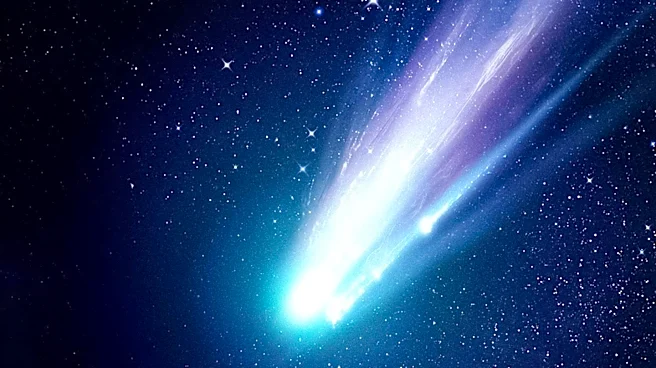
Halley’s Comet, the most famous periodic comet, is predicted to reach its closest point to the Sun, known as perihelion, on July 28, 2061. This event marks a significant opportunity for many people alive today to witness the comet, as its next return
will not occur until 2134. The comet's approach will unfold over several months, allowing for extended observation. Historically, Halley’s Comet has been a subject of fascination, with its periodic return first predicted by Edmond Halley in the 18th century. The comet is also the source of the Orionid and Eta Aquariid meteor showers, which occur annually as Earth passes through the debris left by the comet.
Why It's Important?
The return of Halley’s Comet in 2061 is significant as it offers a rare chance for current generations to observe a celestial event that has been recorded throughout human history. The comet's predictable return has contributed to our understanding of orbital mechanics and the nature of comets. For astronomers and enthusiasts, this event provides an opportunity to study the comet's behavior and composition, potentially yielding new insights into the solar system. Additionally, the comet's visibility will depend on various factors, including its position relative to the Sun and local viewing conditions, making it a unique observational challenge.
What's Next?
As the 2061 perihelion approaches, astronomers will refine predictions about the comet's visibility and behavior. Observers are advised to prepare for the event by staying informed about optimal viewing times and locations. The comet's return will likely spur public interest and educational initiatives, encouraging people to engage with astronomy. Scientific missions may also be planned to study the comet up close, building on past missions like ESA's Giotto spacecraft, which provided valuable data during the comet's 1986 appearance.