






What's Happening?
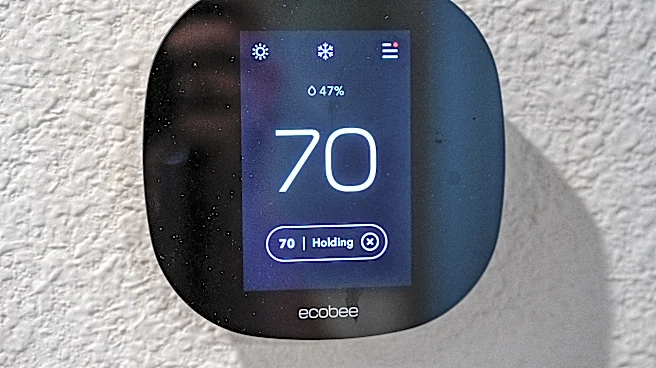
Smart thermostats are emerging as a key innovation for efficiently managing home heating and cooling. These devices allow users to control their home's temperature remotely via smartphone apps or voice commands through personal assistants like Amazon
Alexa and Google Assistant. Unlike traditional thermostats, smart models can learn household routines, automatically adjusting temperatures when residents are away or asleep, thereby preventing unnecessary energy consumption. Many smart thermostats are Energy Star-certified, indicating they meet specific criteria for energy efficiency and can lead to significant savings on utility bills. Features often include humidity sensors, smoke detectors, and the ability to monitor energy usage over time, providing recommendations for further efficiency improvements. Popular models include Google Nest, Mysa, MoesGo, Ecobee, Honeywell Lyric, T9 series, and Emerson Sensi Touch, each offering distinct designs and functionalities.
Why It's Important?
The widespread adoption of smart thermostats holds significant importance for U.S. households and the broader energy sector. For consumers, these devices offer a tangible way to reduce monthly energy expenditures, with some estimates suggesting savings of around $50 per year for Energy Star-certified models. This financial benefit is particularly relevant given fluctuating energy prices. Beyond individual savings, the collective reduction in energy consumption contributes to national energy conservation efforts and can lessen the strain on power grids, especially during peak demand periods. The integration with smart home ecosystems also enhances convenience and accessibility, making energy management simpler for homeowners. Furthermore, by promoting more efficient energy use, smart thermostats support environmental sustainability goals by reducing carbon footprints associated with heating and cooling.
What's Next?
The market for smart thermostats is expected to continue its growth, driven by ongoing technological advancements and increasing consumer awareness of energy efficiency. Future developments may include more sophisticated learning algorithms, enhanced integration with other smart home devices, and improved data analytics to provide even more precise energy-saving recommendations. Manufacturers are likely to focus on making these devices more accessible and easier to install, potentially reducing the need for professional electricians for some models. Utility companies may also expand rebate and incentive programs for smart thermostat installations, further encouraging adoption. As smart home technology evolves, these thermostats will likely play an even more central role in creating fully automated and energy-optimized living spaces.
Beyond the Headlines
The rise of smart thermostats points to a broader shift towards intelligent, interconnected home environments. This trend raises important considerations regarding data privacy, as these devices collect detailed information about household occupancy and energy usage patterns. Ensuring robust security measures and transparent data policies will be crucial for maintaining consumer trust. Moreover, the increasing reliance on smart technology for essential home functions highlights the importance of reliable internet connectivity and cybersecurity. On an ethical level, these devices empower individuals to make more informed choices about their energy consumption, fostering a greater sense of environmental responsibility. The aesthetic integration of these devices into home decor also reflects a growing demand for technology that is both functional and visually appealing, influencing product design across the smart home industry.