



What's Happening?
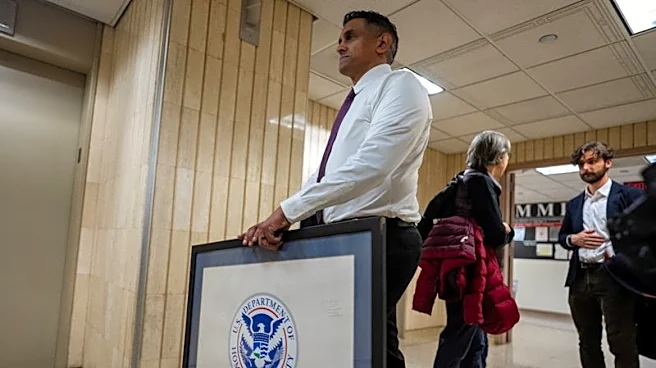
House Speaker Mike Johnson announced that the House of Representatives will propose a new version of a bill to fund the Department of Homeland Security (DHS), potentially extending the agency's shutdown. The current shutdown, which began on February 14,
has left DHS without new federal funding. The proposed plan involves using reconciliation to fund Immigration and Customs Enforcement (ICE) and Customs and Border Protection (CBP) without Democratic support, followed by a bipartisan bill to fund the rest of DHS. Johnson criticized the Senate's version of the bill, claiming it contains 'problematic language' that could 'orphan' immigration operations. The shutdown has become the longest partial government shutdown in U.S. history, with significant impacts on DHS operations, including the Secret Service. President Trump has urged Republicans to support the reconciliation bill to bypass Democratic opposition.
Why It's Important?
The ongoing shutdown of the Department of Homeland Security has significant implications for national security and immigration enforcement in the United States. The lack of funding affects critical agencies such as the Secret Service, the Coast Guard, and the Transportation Security Administration, potentially compromising their operations. The political standoff highlights deep divisions between Republicans and Democrats over immigration policy, particularly regarding enforcement tactics. The proposed reconciliation bill aims to secure funding for ICE and CBP, which are central to the Trump administration's immigration strategy. The outcome of this legislative effort will impact the administration's ability to enforce immigration laws and secure the border, affecting millions of people and various sectors reliant on DHS services.
What's Next?
The House is expected to take up the reconciliation bill this week, with potential modifications to address concerns raised by Speaker Johnson. If the House passes a new version of the bill, it will require approval from the Senate before becoming law. The urgency to resolve the shutdown has increased following a recent shooting at the White House correspondents' dinner, which underscored the need for funded law enforcement. The ongoing negotiations will test the ability of congressional leaders to reach a compromise that satisfies both parties. The resolution of the shutdown will also depend on the willingness of Democrats to accept the proposed funding structure for immigration enforcement.