






What's Happening?
American hay growers are experiencing a challenging year due to a combination of persistent drought, an invasive pest, and soaring fuel prices. Farmers in major hay-producing states like Texas, Oklahoma, and Nebraska have seen suppressed yields, with
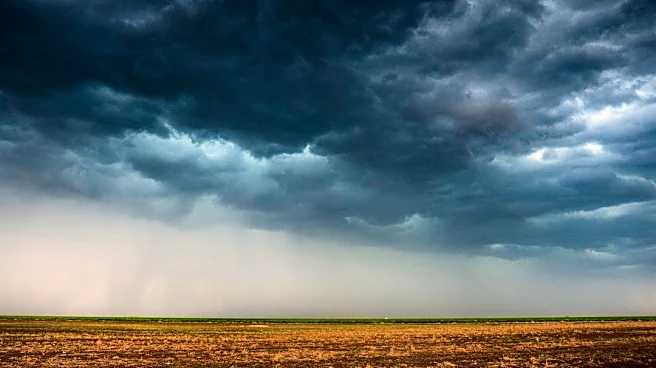
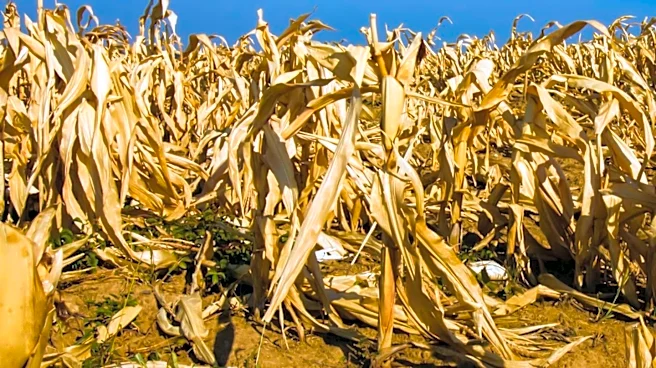
many only achieving one cutting instead of the usual two or three. Bob Moore, a hay farmer in southern Oklahoma, noted a 60-day period without rain after an optimistic start to the spring. This drought has significantly impacted the quantity of hay produced. Additionally, record-high diesel prices have increased operational costs for farmers, affecting profitability and the cost of supplies like net wrap and twine, which are oil-based. An invasive pasture mealybug, first noticed in Texas in 2022, has further damaged hay grasses, reducing productivity. Danielle Sekula, a pest management specialist with the Texas A&M AgriLife Extension Service, explained that the mealybug injects a toxin into the grass, weakening the plant and contributing to reduced cuttings, especially in conjunction with the drought.
Why It's Important?
The struggles of U.S. hay growers have significant implications for the livestock industry and the broader agricultural economy. Hay is a critical feed source for livestock, particularly during winter months when grazing is limited. Reduced hay harvests are driving up costs for cattle and horse owners, who must pay a premium to feed their animals. This added expense comes at a time when the overall cost of doing business in agriculture is already abnormally high. Brock Ortner, a livestock extension educator at the University of Nebraska-Lincoln, highlighted that many ranchers had low hay inventories going into the year, and the widespread drought means there are fewer affordable options for purchasing hay from other regions. The increased cost of feed can lead to higher prices for meat and dairy products, impacting consumers. Furthermore, the combination of environmental challenges and economic pressures threatens the financial stability of hay producers and livestock farmers, potentially leading to consolidation or exits from the industry.
What's Next?
The immediate future for U.S. hay growers and livestock producers will likely involve continued efforts to manage the impacts of drought, pests, and high fuel costs. Farmers may explore alternative feed sources or adjust herd sizes to cope with increased hay prices. The emergency approval of pesticides like Centric 40WG for mealybug control offers some relief, but its cost and the difficulty of early detection limit its effectiveness. Researchers and extension services will continue to work on more sustainable and cost-effective pest management strategies. The long-term outlook will depend on weather patterns, global oil prices, and the development of more resilient hay varieties. Policy interventions, such as drought relief programs or fuel subsidies, could also play a role in mitigating the financial strain on farmers. The situation underscores the need for agricultural practices that enhance resilience to climate change and market volatility.
Beyond the Headlines
This situation highlights the interconnectedness of environmental factors, economic forces, and agricultural sustainability. The triple whammy faced by hay growers is a microcosm of the broader challenges confronting the U.S. agricultural sector, including climate change impacts, supply chain vulnerabilities, and the rising cost of inputs. The invasive pasture mealybug exemplifies the growing threat of non-native species to agricultural ecosystems, often exacerbated by global trade and changing climate conditions. The reliance on fossil fuels for farming operations, from machinery to fertilizer and baling supplies, exposes the sector to significant price volatility. This scenario also raises questions about food security and the resilience of local food systems. The long-term implications could include shifts in agricultural land use, changes in livestock production practices, and increased consumer prices for animal products, prompting a reevaluation of agricultural policies and investment in sustainable farming methods.