
What's Happening?
Unitaid has announced a US$10.9 million investment to safeguard essential medicines, diagnostics, and other health products from the increasing threats of rising temperatures and humidity. This initiative,
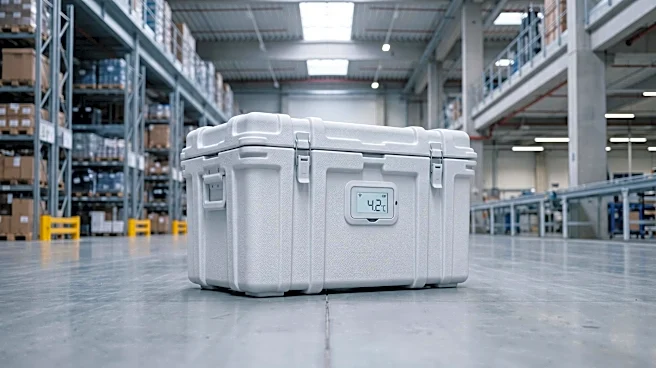
known as the Safeguarding Heat Stability in Essential Life-Saving Drugs and Diagnostics (SHIELD) project, will run from 2027 to 2030. It aims to address a critical, often overlooked aspect of preparing health systems for climate change: ensuring the efficacy of health products throughout global supply chains. The project, led by the United States Pharmacopeia (USP), will investigate which essential health products are currently vulnerable to heat and humidity and which could become vulnerable over the next 20-30 years. Researchers will measure temperature and humidity exposures during storage, transport, and delivery in India, Kenya, Nigeria, and Senegal, with validation in Brazil and South Africa. Laboratory testing will assess product responses to these conditions, and climate projections will help anticipate future risks. The findings will inform solutions such as improved packaging, temperature monitoring, changes to storage and distribution, or product improvements, alongside updates to global guidance and regulatory practices.
Why It's Important?
This initiative is crucial for global health security, particularly in low- and middle-income countries where infrastructure limitations exacerbate the challenges of maintaining stable conditions for health products. Climate change poses a significant threat to the integrity of life-saving medicines and diagnostic tests, potentially rendering them ineffective before they reach patients. The SHIELD project will provide essential data to develop climate-resilient strategies, ensuring continued access to quality health products in vulnerable communities. By identifying at-risk products and developing practical solutions, Unitaid and its partners aim to prevent the loss of efficacy in treatments for diseases like HIV, tuberculosis, malaria, and those related to maternal and child health. This proactive approach is vital for strengthening health systems worldwide and mitigating the impact of climate change on public health outcomes, ultimately saving lives and reducing the burden of preventable diseases.
What's Next?
The SHIELD project will proceed with data collection and analysis across six countries from 2027 to 2030. The findings will be used to shape new policies, practices, and solutions for developing and delivering health products in a warming world. This could include recommendations for better packaging, enhanced temperature monitoring systems, adjustments to storage and distribution protocols, or even modifications to the products themselves. The project also aims to update global guidance and regulatory practices concerning how health products are tested, approved, and procured. Furthermore, the initiative will prioritize solutions led by the Global South and support promising approaches that can attract further investment. The consortium will develop guidance to help countries integrate product heat resilience into their health adaptation planning, influencing future decisions on procurement, regulation, and investment in health supply chains.
Beyond the Headlines
The Unitaid initiative highlights a deeper systemic vulnerability within global health supply chains that extends beyond immediate climate impacts. It underscores the ethical imperative to ensure that advancements in medical science remain accessible and effective, especially for populations most affected by climate change and lacking robust infrastructure. The project's focus on understanding and adapting to environmental stressors in product delivery points to a broader need for climate-resilient healthcare systems. This includes not only the physical integrity of medicines but also the entire ecosystem of healthcare delivery, from manufacturing to the last mile. The collaboration between scientific organizations, health agencies, and local communities in this project also exemplifies a growing recognition that global health challenges require integrated, multi-stakeholder approaches that consider both scientific innovation and practical, on-the-ground realities.