
What's Happening?
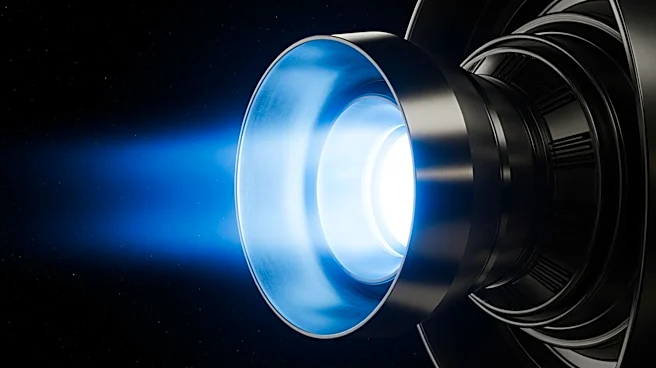
NASA's Jet Propulsion Laboratory (JPL) in Southern California has successfully tested a prototype lithium-fed magnetoplasmadynamic thruster, marking a significant advancement in propulsion technology for potential
crewed missions to Mars. Conducted on February 24, 2026, this test achieved power levels exceeding any previous electric thruster tests in the United States, reaching up to 120 kilowatts. The thruster, which operates using lithium metal vapor, was tested in JPL's Electric Propulsion Lab, a facility designed for high-power electric thruster testing. This development is part of NASA's broader efforts to advance nuclear electric propulsion systems, which could significantly enhance the efficiency and capability of spacecraft for long-duration missions.
Why It's Important?
The successful testing of this high-power thruster represents a critical step toward enabling human exploration of Mars. Electric propulsion systems like the one tested use significantly less propellant compared to traditional chemical rockets, offering a more efficient means of space travel. This technology could reduce the launch mass and support the payload requirements for human missions to Mars, potentially making such missions more feasible and cost-effective. The ability to operate at high power levels and provide greater thrust could also accelerate travel times, making deep space exploration more practical.
What's Next?
NASA plans to continue testing and developing the lithium-fed thruster, aiming to reach power levels between 500 kilowatts and 1 megawatt per thruster. This will involve addressing challenges related to the high temperatures at which the thruster operates, ensuring the components can withstand prolonged use. The ultimate goal is to integrate these thrusters into a nuclear electric propulsion system capable of supporting human missions to Mars, which would require multiple thrusters operating for extended periods. Continued collaboration with institutions like Princeton University and NASA's Glenn Research Center will be crucial in advancing this technology.