







What's Happening?
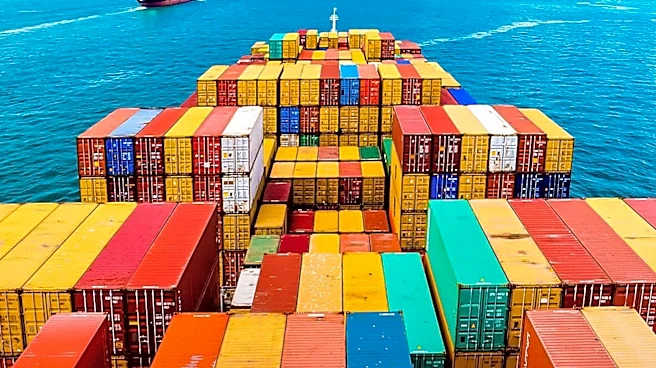
Houthi attacks in the Red Sea have made the shipping route unsafe for vessels heading to the Suez Canal, forcing many ships traveling between Asia and Europe to reroute via the Cape of Good Hope. This detour adds an expensive 11,000km to journeys, impacting
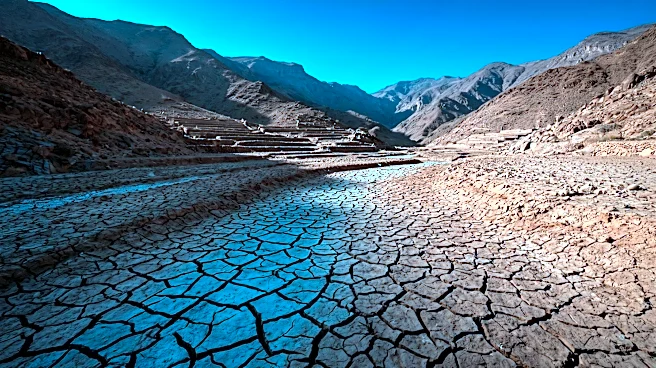
global trade, particularly the coffee industry. Historically, Yemen's port of Mocha was central to the global coffee trade, giving its name to the beverage. However, its dominance waned due to competition and the shift in Yemeni agriculture from coffee to qat, a mildly narcotic leaf. Qat cultivation now consumes over 40% of Yemen’s renewable water resources, leading to severe water scarcity, with the capital Sana’a facing the prospect of running out of water. This ecological crisis is linked to the rise of the Houthis, whose grievances are rooted in a landscape of dying wells and failing farms.
Why It's Important?
The disruption of Red Sea shipping by Houthi attacks has significant economic consequences, particularly for European coffee imports, with over a quarter originating from Southeast Asia. The extended shipping routes increase costs and supply chain pressures, affecting consumers and businesses globally. This situation highlights the vulnerability of international trade to regional conflicts and the strategic importance of maritime choke points. Domestically, Yemen faces a severe humanitarian crisis exacerbated by the conflict and the ecological impact of qat cultivation. The depletion of water resources due to qat farming creates a cycle of poverty and instability, which has historically fueled the rise of groups like the Houthis. Efforts to revive Yemeni coffee farming through 'qat-to-coffee' conversion programs represent a potential pathway to address both economic and environmental challenges, offering a glimpse of historical restitution and sustainable development.
What's Next?
The immediate future will likely see continued rerouting of shipping traffic around the Cape of Good Hope, maintaining elevated shipping costs and supply chain pressures. The global coffee market may experience further shifts, with consumers and businesses adapting to higher prices and potential changes in coffee availability. In Yemen, the humanitarian crisis is expected to persist, with ongoing challenges related to water scarcity and food insecurity. The success of 'qat-to-coffee' conversion programs will be crucial in determining the long-term agricultural and economic trajectory of the country. International efforts to secure shipping lanes in the Red Sea and address the underlying conflict in Yemen will be vital to mitigating these impacts and fostering regional stability. The interplay between geopolitical tensions, environmental degradation, and economic shifts will continue to shape the region.
Beyond the Headlines
The current crisis in the Red Sea and Yemen reveals a complex interplay of historical, ecological, and geopolitical factors. The decline of Mocha's coffee monopoly centuries ago, driven by smuggling and colonial competition, set in motion a chain of events that ultimately led to the widespread cultivation of qat and the subsequent water crisis. This 'hydrological bankruptcy' created fertile ground for social unrest and the rise of the Houthis, demonstrating how long-term ecological shifts can profoundly influence political movements and conflict. The current Houthi attacks, while seemingly a modern geopolitical issue, are deeply rooted in this historical and environmental context. The story of coffee, from its origins in Yemen to its global spread, illustrates how a single commodity can shape trade routes, economies, and even the political landscape, with its complex history continuing to influence contemporary challenges.