
What's Happening?
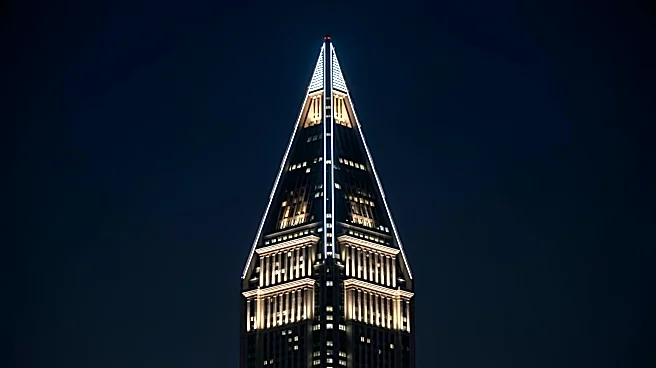
The Flatiron Building in New York City has been illuminated for the first time in its 124-year history as part of a major restoration and conversion project. The lighting installation is a significant
milestone in the building's transformation into private residences. The project, led by The Brodsky Organization and The Sorgente Group, aims to preserve the building's historic Beaux-Arts façade while introducing modern residential elements. The lighting system, designed by L’Observatoire International, uses energy-efficient LED fixtures to subtly highlight the building's architecture. This development is part of a broader trend of adaptive reuse of historic structures across the U.S., which has seen a significant increase in recent years.
Why It's Important?
The restoration and conversion of the Flatiron Building reflect a growing trend in the U.S. towards the adaptive reuse of historic buildings. This approach not only preserves architectural heritage but also contributes to environmental sustainability by reducing carbon emissions associated with new construction. The project highlights the economic and cultural value of preserving historic landmarks while adapting them for modern use. The conversion into luxury residences also indicates a shift in urban development strategies, focusing on high-end residential spaces in iconic locations. This trend could influence future urban planning and real estate development, emphasizing the importance of integrating historical preservation with contemporary living.
What's Next?
As the restoration progresses, residents are expected to begin moving into the newly converted luxury residences by autumn. The completion of the project will likely attract attention from both real estate investors and cultural preservationists, potentially setting a precedent for similar projects in other historic buildings. The success of the Flatiron Building's transformation could encourage further investment in the adaptive reuse of historic structures, promoting sustainable development practices. Additionally, the building's new lighting and residential conversion may enhance its status as a cultural and architectural icon, drawing more visitors and residents to the area.