
What's Happening?
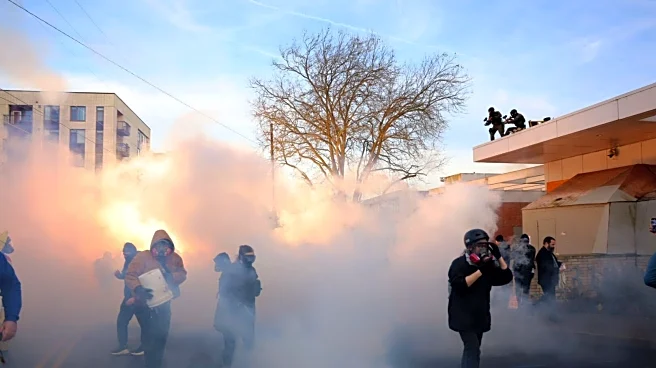
The Pentagon's Northern Command has stood down more than 1,500 federal troops who were on alert for potential deployment to Minneapolis. This decision follows a period of heightened tension in the city
after the fatal shootings of two individuals by federal officers. The troops, primarily from the 11th Airborne Division based in Alaska, were initially ordered to prepare for a possible mission to the Twin Cities. Additional units, including 200 Texas National Guard troops, were also directed to make preparations. The stand-down order comes as the Trump administration signals a potential de-escalation in Minneapolis. In response to the situation, Department of Homeland Security Secretary Kristi Noem announced that all officers in Minneapolis will begin wearing body cameras, with plans to expand the program nationwide as funding allows.
Why It's Important?
The decision to stand down the troops is significant as it indicates a shift towards de-escalation in Minneapolis, potentially reducing tensions in the city. The initial alert for troop deployment was linked to President Trump's consideration of invoking the Insurrection Act of 1807, which allows for federal troops to be used in domestic law enforcement under specific circumstances. The use of such a measure could have escalated the federal government's involvement in local law enforcement, raising concerns about the militarization of domestic policing. The introduction of body cameras for officers in Minneapolis is a step towards increased transparency and accountability, which may help rebuild public trust in law enforcement agencies.
What's Next?
The situation in Minneapolis will likely continue to evolve as local and federal authorities work to address the underlying issues that led to the recent unrest. The implementation of body cameras is expected to be a key focus, with the potential for nationwide expansion. Additionally, the response from local communities and civil rights organizations will be crucial in shaping future policies and practices. The federal government's approach to handling similar situations in other cities may also be influenced by the outcomes in Minneapolis.