



What's Happening?
A global pandemic affecting sea urchins, particularly the species Diadema africanum, has been reported in the Canary Islands, according to a study published in Frontiers in Marine Science. This pandemic has led to a significant decline in sea urchin populations,
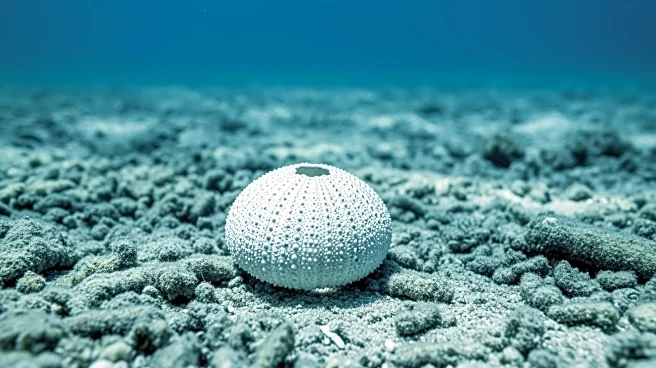
which are crucial for maintaining marine ecosystems by controlling algae growth. The outbreak, which began in 2022, has resulted in mass die-offs across the Canary Islands and other regions such as the Caribbean, Mediterranean, and Red Sea. Researchers, including Iván Cano from the University of La Laguna, have observed that the disease causes sea urchins to become inactive, lose their spines, and eventually die. The pandemic has severely impacted the population of D. africanum, with some areas experiencing a 99.7% decrease in numbers.
Why It's Important?
The decline of sea urchin populations poses a significant threat to marine ecosystems, as these creatures play a vital role in maintaining the balance of marine habitats. Sea urchins help control algae growth, which, if left unchecked, can lead to the destruction of coral reefs and other marine environments. The loss of sea urchins could result in the proliferation of 'urchin barrens,' areas stripped of plant life, which can have cascading effects on marine biodiversity. The pandemic highlights the vulnerability of marine ecosystems to diseases and the potential for widespread ecological disruption. Understanding and mitigating the impacts of such pandemics are crucial for preserving marine biodiversity and the services these ecosystems provide.
What's Next?
Researchers are continuing to investigate the cause of the pandemic, with some suspecting a pathogen similar to those responsible for previous die-offs. The identification of the pathogen is critical for developing strategies to manage and mitigate the outbreak. There is also a need for increased monitoring of sea urchin populations and their habitats to assess the long-term impacts of the pandemic. Conservation efforts may include measures to protect remaining populations and restore affected areas. The situation underscores the importance of global cooperation in addressing marine health issues, as the spread of the disease could have far-reaching consequences for marine ecosystems worldwide.
Beyond the Headlines
The sea urchin pandemic raises broader questions about the resilience of marine ecosystems in the face of climate change and human activities. Overfishing, pollution, and habitat destruction have already stressed many marine environments, making them more susceptible to disease outbreaks. The pandemic also highlights the interconnectedness of global marine ecosystems, as pathogens can spread across vast distances through ocean currents and human activities. Addressing these challenges requires a comprehensive approach that includes reducing human impacts, enhancing ecosystem resilience, and improving our understanding of marine diseases.