
What's Happening?
Preservationists are maintaining their lawsuit against President Trump's proposed $400 million White House ballroom, despite a request from the Department of Justice to drop the case. The DOJ's request followed
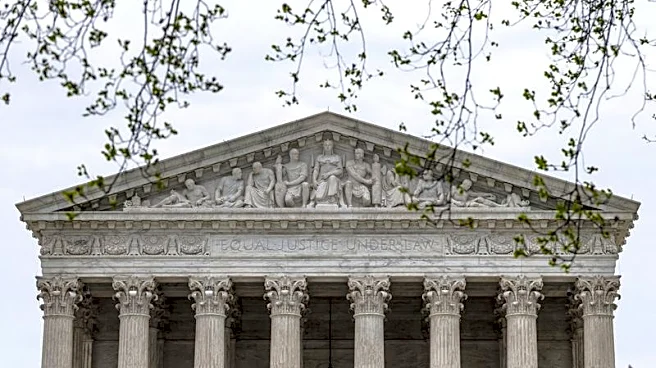
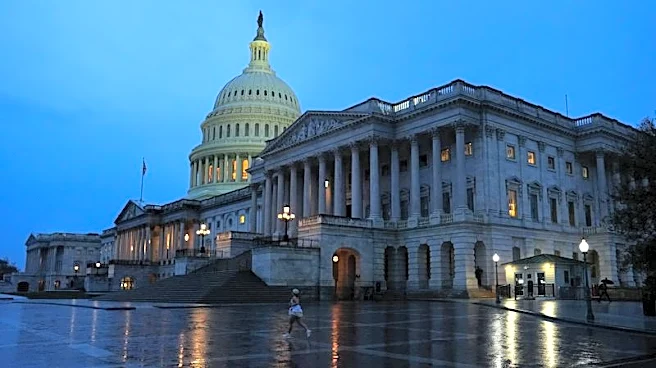
a shooting incident at the White House Correspondents' Dinner, which Trump and his supporters argue highlights the need for enhanced security measures, such as the ballroom. The National Trust for Historic Preservation, represented by attorney Gregory Craig, insists that the legal issues remain unchanged, emphasizing that the construction requires congressional approval, which has not been obtained. The Trust's lawsuit, filed in December, challenges the legality of the project, which involves demolishing the East Wing to make way for the ballroom. A federal appeals court has allowed the project to continue, with a hearing scheduled for June 5 to review the case.
Why It's Important?
The lawsuit against the White House ballroom project underscores the ongoing tension between executive actions and legal constraints. The case highlights the importance of adhering to constitutional and statutory requirements for significant federal projects. The outcome could set a precedent for how future administrations approach similar projects, balancing security needs with legal obligations. The decision also has implications for the preservation of historic sites and the role of private funding in public projects. If the project proceeds without congressional approval, it could lead to increased executive power in federal construction projects, potentially bypassing traditional checks and balances.
What's Next?
The legal battle is set to continue, with a federal appeals court hearing scheduled for June 5. The Department of Justice may seek to dissolve the earlier court ruling against the project if the National Trust does not voluntarily dismiss the lawsuit. Meanwhile, some Republican lawmakers are considering introducing legislation to authorize the ballroom project, citing security concerns highlighted by the recent shooting incident. The outcome of these legislative efforts and the court's decision will determine the future of the ballroom project and could influence similar initiatives in the future.