



What's Happening?
The Houthi rebel movement in Yemen has launched ballistic missiles at Israel, marking its entry into the ongoing conflict involving Israel, the United States, and Iran. The Iran-aligned Houthis claimed responsibility for the attack, stating it was in response
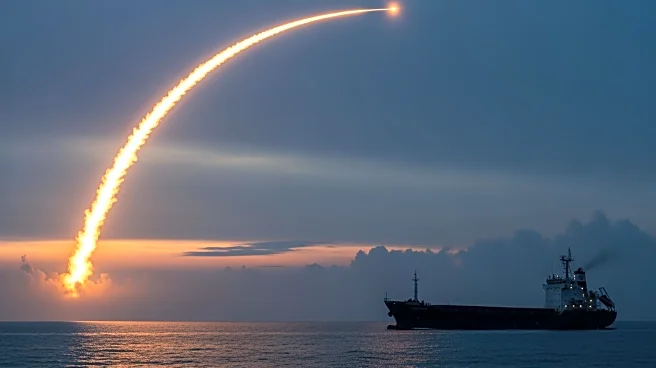
to continued aggression against Iran, Lebanon, Iraq, and Palestinian territories. Israel's military intercepted the missile, and no casualties were reported. This development risks further escalation in the region, particularly in the Red Sea, a critical artery for global trade. The Houthis have previously targeted ships in the Red Sea, significantly reducing traffic through the waterway.
Why It's Important?
The missile attack by the Houthis could have significant implications for global trade, particularly in the Red Sea, which is a vital corridor for commerce between Europe and Asia. The Red Sea is crucial for oil shipments, and disruptions could exacerbate the turmoil in global shipping and oil markets. The attack also highlights the potential for broader regional conflict, as the Houthis join other Iranian-backed groups like Hezbollah and Iraqi militias in the war. This escalation could lead to increased military and economic tensions, affecting supply chains and the global energy system.
What's Next?
The Houthis have indicated they may further disrupt shipping in the Red Sea, potentially closing the Bab el-Mandeb Strait, a narrow chokepoint for global trade. Iran has also signaled that the waterway could become a target due to the presence of the American aircraft carrier USS Gerald R. Ford. The situation may lead to increased military actions and economic disruptions, with stakeholders like the U.S., Israel, and Iran closely monitoring developments.
Beyond the Headlines
The conflict underscores the complex geopolitical dynamics in the Middle East, where proxy wars and regional alliances play a significant role. The Houthis' actions reflect broader tensions between Iran and its adversaries, including the U.S. and Israel. The potential closure of strategic waterways like the Bab el-Mandeb Strait could have long-term impacts on global trade and energy markets, highlighting the interconnectedness of military and economic interests in the region.