




What's Happening?
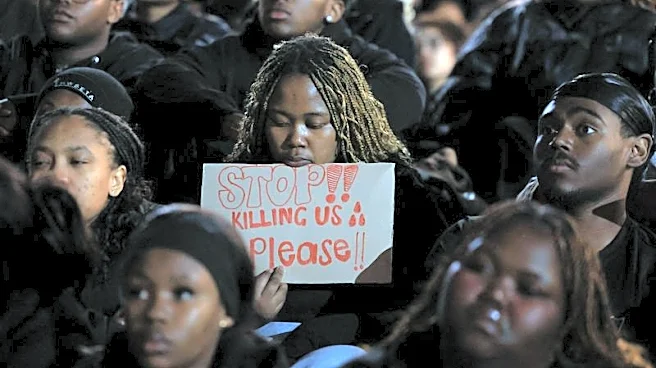
President Cyril Ramaphosa of South Africa has publicly addressed the ongoing crisis of gender-based violence and femicide (GBVF) in the country, stating that women should not have to live in fear of men. His comments were made on the sidelines of an African
National Congress (ANC) fundraising event in Woodmead, marking his first public appearance since returning from the BRICS Summit in India. Ramaphosa acknowledged the widespread fear among women due to GBVF, particularly in light of recent murders in Ekurhuleni, which have fueled concerns about a possible serial killer. He emphasized that the government views GBVF as a disaster and is actively working to address the problem, with the Inter-Ministerial Committee on Gender-Based Violence and Femicide reviewing a plan to tackle the crisis. Additionally, President Ramaphosa commented on actions taken by the White House regarding U.S. visa restrictions for certain South Africans, asserting the government's commitment to protecting its sovereignty.
Why It's Important?
President Ramaphosa's statements highlight a critical social issue in South Africa, where gender-based violence and femicide continue to be a significant challenge. His public acknowledgment and commitment to addressing the crisis underscore the severity of the situation and the government's intent to implement solutions. The reference to U.S. actions regarding visa restrictions introduces an international dimension, suggesting potential diplomatic tensions or policy disagreements between the two nations. While the specifics of the U.S. concerns are not detailed, the mention of 'race-based laws' implies a broader debate on national sovereignty and international relations. This could impact bilateral ties, trade, and travel between the U.S. and South Africa, potentially affecting U.S. citizens and businesses operating in or traveling to South Africa, depending on the nature and scope of the visa restrictions and the South African government's response.
What's Next?
The Inter-Ministerial Committee on Gender-Based Violence and Femicide is currently reviewing a plan to address the crisis, indicating that new policies or intensified efforts are likely to be announced or implemented in the near future. The government's focus will be on strengthening measures to protect women and hold perpetrators accountable, potentially leading to increased law enforcement actions, public awareness campaigns, and support services for victims. Regarding the U.S. visa restrictions, further details from both the White House and the South African government are anticipated. This could involve diplomatic discussions, official statements clarifying the reasons for the restrictions, or potential retaliatory measures from South Africa to protect its citizens and sovereignty. The ongoing dialogue between the two nations will determine the future trajectory of their relationship and the practical implications for travel and international cooperation.
Beyond the Headlines
The issue of gender-based violence and femicide in South Africa reflects deep-seated societal challenges, including patriarchal norms, economic inequality, and systemic failures in protection and justice. President Ramaphosa's call for men to 'change their ways' points to the need for fundamental cultural shifts and educational initiatives to address the root causes of violence. The government's response to the U.S. visa restrictions, particularly the emphasis on protecting sovereignty, highlights the complexities of international relations where domestic policies can intersect with global perceptions and diplomatic pressures. This situation could spark broader discussions about human rights, racial justice, and the role of international bodies in influencing national legislation. The long-term implications could include a re-evaluation of South Africa's foreign policy alignment and its engagement with Western powers, potentially influencing its stance on various global issues and its relationships within multilateral forums.