



What's Happening?
Dr. Abdul El-Sayed, a progressive candidate running for a Democratic Senate seat in Michigan, has faced criticism from Republican opponents regarding his collection of watches. GOP critics have characterized his timepieces as 'luxury watches,' suggesting
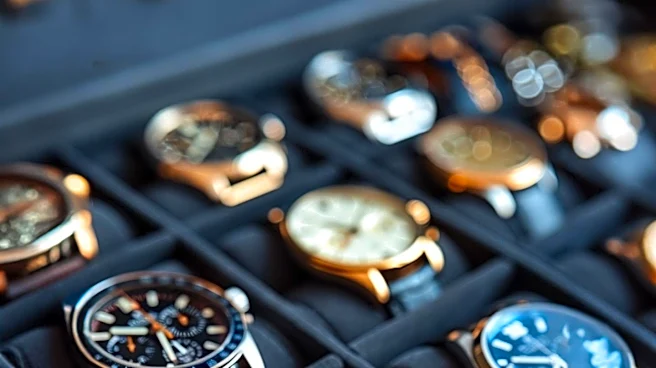
hypocrisy given his focus on reducing wealth inequality and supporting the working class. However, a closer examination of his public appearances reveals that El-Sayed's watch choices lean towards 'geek chic' rather than overt luxury. His collection includes mechanical timepieces like the Sinn U-1 SE and a Mühle-Glashütte S.A.R. Rescue-Timer, which watch experts describe as choices made by a 'true watch guy' who has done his research, rather than someone seeking to show off. The Washington Free Beacon, a conservative site, highlighted his watches, but experts argue that most of his selections are not particularly showy or expensive, with many retailing in the $2,000-$4,000 range, which is considered entry-level for high-end watches today.
Why It's Important?
This scrutiny of Abdul El-Sayed's watch collection highlights a common tactic in political campaigns: using personal possessions to question a candidate's authenticity or alignment with their stated values. For El-Sayed, a progressive advocating for reduced wealth inequality, the accusation of owning 'luxury' items aims to undermine his credibility with working-class voters. This situation reflects the broader political landscape where personal lifestyle choices of public figures are often weaponized to create narratives, regardless of their actual cost or intent. It also underscores the evolving definition of 'luxury' in consumer goods, as what might have been considered high-end years ago is now seen as more accessible, yet still subject to political interpretation. The debate over his watches distracts from policy discussions and instead focuses on superficial aspects of a candidate's image.
What's Next?
As the November midterm elections approach, it is likely that El-Sayed's opponents will continue to use such personal details to frame him as out of touch with his progressive platform. El-Sayed, or his campaign, may need to proactively address these criticisms, perhaps by further explaining his interest in watches as a hobby rather than a display of wealth, or by emphasizing his policy positions to redirect the narrative. The incident also suggests that other progressive candidates, particularly those with visible personal interests, might face similar scrutiny. This could lead to candidates being more cautious about their public image and personal expressions, or conversely, embracing them as part of an authentic persona, depending on their campaign strategy and target demographic.
Beyond the Headlines
The controversy surrounding Abdul El-Sayed's watch collection delves into the ethical and cultural dimensions of political campaigning, where personal consumption choices are scrutinized for their symbolic value. It raises questions about what constitutes 'luxury' in a society grappling with wealth disparities and how public figures are expected to embody their political ideologies in their daily lives. The incident also highlights a generational shift, as younger progressive politicians like El-Sayed and New York City Mayor Zohran Mamdani (who wears a $160 Casio) are redefining what it means to be a public servant, often embracing 'geek chic' or understated styles rather than traditional symbols of power. This shift challenges conventional perceptions of leadership and wealth, prompting a re-evaluation of how authenticity and relatability are perceived in modern politics.