








What's Happening?
The Connecticut Department of Energy and Environmental Protection (DEEP) has initiated enforcement action against Wright Investors’ Service Holdings (WISH), the owner of a dam responsible for draining Old Killingly Pond. On Tuesday, DEEP sent WISH a draft
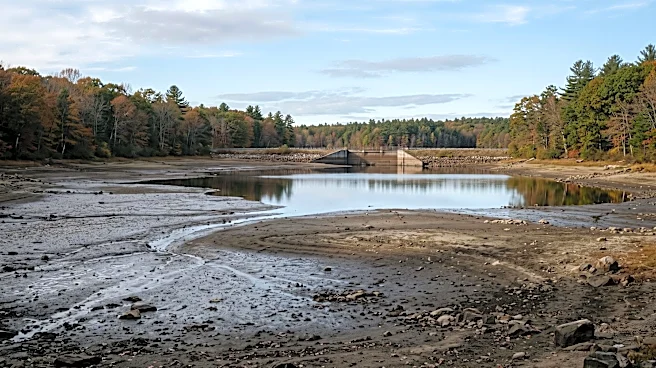
consent order, marking the first step in compelling the company to repair the dam and restore the pond's water levels to their pre-drawdown state. This action follows an emergency drawdown authorized by state officials last October due to concerns about the dam's safety, which resulted in the pond shrinking to a quarter of its original size. The decision to take enforcement action is based on DEEP's determination that the continued low water levels would negatively impact habitats for protected plants and animals, including several species of damselflies. Residents and local officials have been campaigning for the pond's restoration and for the state to potentially take ownership of the dam, citing issues such as dried-up wells, excess sediment downstream, and concerns for fire safety in East Killingly.
Why It's Important?
This enforcement action is significant for environmental protection and community well-being in Connecticut. The draining of Old Killingly Pond has had severe ecological consequences, threatening protected species and altering natural habitats. Beyond the environmental impact, the reduced water levels have directly affected local residents, causing wells to dry up and impacting the aesthetic and recreational value of the area. The situation also poses a public safety concern, as fire officials in East Killingly have warned about the lack of water for tanker trucks, which is crucial in an area without hydrants. The exposure of a suspected Native American burial ground due to lower water levels adds a cultural and historical dimension to the issue, highlighting the broader implications of environmental changes. This case underscores the state's role in holding private entities accountable for infrastructure maintenance that impacts public and environmental resources, setting a precedent for similar situations involving privately owned dams and their ecological responsibilities.
What's Next?
The next phase involves WISH's response to DEEP's draft consent order. Graham Stevens, head of DEEP’s Bureau of Water Protection and Land Reuse, indicated that the letter invites WISH to enter an agreement for the necessary repairs. If WISH declines, DEEP has other enforcement tools at its disposal to ensure the dam is repaired. State Sen. Mae Flexer, D-Windham, noted that any potential state takeover of the dam is likely months away, emphasizing that the current action is the 'beginning of the process.' The restoration work, including dam repairs and raising water levels, is expected to be a multi-year effort and could cost 'multiple millions of dollars.' Residents are cautiously optimistic but also express trepidation about WISH's willingness to comply, given that the company's acting chief financial officer stated WISH has no business operations or revenue. This suggests that securing funding and commitment for the extensive repairs could be a significant challenge, potentially leading to prolonged negotiations or further legal action.
Beyond the Headlines
This incident brings to light the complex challenges associated with aging infrastructure, particularly privately owned dams, and their environmental and social responsibilities. The case of Old Killingly Pond illustrates how a single piece of infrastructure can have cascading effects on local ecosystems, community resources, and even historical sites. The fact that residents were unaware of WISH's ownership until the draining began highlights a broader issue of transparency and accountability for private entities managing critical public-affecting infrastructure. The debate over whether the state should take ownership of the dam points to a growing recognition of the need for public oversight and potential intervention when private ownership fails to meet environmental and safety standards. This situation could prompt a reevaluation of regulations concerning dam ownership, maintenance, and emergency protocols, potentially leading to more stringent requirements and greater public involvement in the management of such vital resources across the U.S.