






What's Happening?
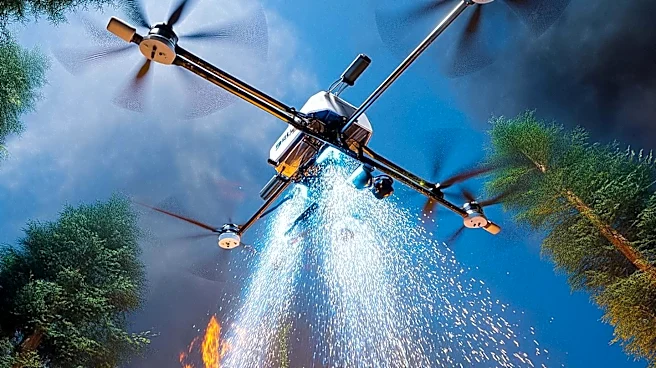
The San Bernardino County Fire Protection District has procured a fleet of five autonomous firefighting drones from Seneca Systems. These drones are designed to rapidly suppress newly detected wildfires before they escalate. The system includes a mobile
operations base and autonomy software, enabling a single pilot to supervise the entire five-drone team. Each drone is capable of delivering over 500 gallons of firefighting foam to a target area. San Bernardino County, the largest county in the U.S. by land area, is particularly susceptible to wildfires. Fire Chief Dan Munsey aims to stop 90% of fires before they exceed 10 square feet, with these autonomous drones playing a crucial role. The drones can reach starting fires within 10 minutes of detection and operate 24/7, including at night and in difficult-to-access terrain, thanks to their onboard sensor suites. This deployment marks one of the first instances of AI-powered Seneca drones being used by civilian first-responder agencies, although Drones-as-First-Responder (DFR) systems are becoming more common in the U.S.
Why It's Important?
This deployment signifies a significant advancement in wildfire management strategies, particularly for regions prone to large-scale blazes like California. The ability of these autonomous drones to rapidly respond, operate in challenging conditions, and be controlled by a single operator offers a force multiplier for firefighting efforts. This technology can help contain fires in their nascent stages, potentially preventing them from growing into devastating infernos that threaten communities and natural resources. By freeing up human firefighters from initial attack duties, these drones can enhance safety and allow personnel to focus on other critical incidents. The integration of AI into these systems also points to a broader trend of leveraging advanced technology to improve emergency response efficiency and effectiveness, setting a precedent for other fire departments across the nation facing similar challenges.
What's Next?
The autonomous firefighting drones are expected to enter service ahead of the 2027 wildfire season. Their performance in real-world wildfire scenarios will be closely monitored, and successful deployment could lead to wider adoption of similar technologies by other fire departments in California and across the United States. Further development and integration of AI capabilities in drone technology for various first-responder roles are also anticipated. This could include enhanced sensor capabilities for early detection, improved navigation in complex environments, and more sophisticated coordination among drone swarms. The success of this initiative may also spur further investment and innovation in autonomous systems for public safety, potentially leading to more specialized drones for different types of emergencies.
Beyond the Headlines
The adoption of autonomous firefighting drones raises broader discussions about the evolving role of AI and automation in public safety. While offering clear benefits in terms of efficiency and safety, it also prompts considerations regarding the balance between human oversight and autonomous operation, especially in critical situations. The ethical implications of AI-driven decision-making in emergency response, though currently limited to foam deployment, could become more complex as drone capabilities advance. Furthermore, the economic impact on traditional firefighting roles and the need for new training and skill sets for personnel to manage these advanced systems will be important considerations. This development also highlights the increasing reliance on technology to mitigate the growing challenges posed by climate change, such as more frequent and intense wildfires.