




What's Happening?
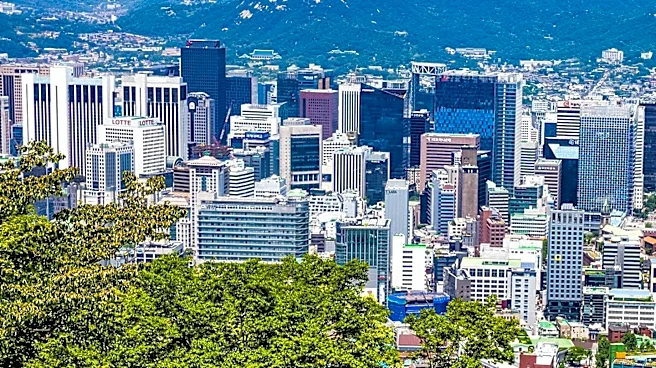
During the Seoul Defense Dialogue, Philippine Defense Minister Gilberto Teodoro publicly criticized China's actions in the South China Sea. He emphasized the importance of adhering to the United Nations Convention on the Law of the Sea (UNCLOS) and called
out countries that do not comply, a remark widely interpreted as directed at China. The situation escalated when an individual, later identified as a Chinese defense attaché, passed a note to Teodoro during his speech. The note asserted that the 2016 Permanent Court of Arbitration (PCA) ruling, which favored the Philippines and invalidated China's historical claims in the South China Sea, was 'illegal and void.' Teodoro read the note aloud and responded sharply, stating that China's position amounted to 'throwing UNCLOS on the floor and trampling on it' and that China's rejection of the ruling was because 'you lost.' He also criticized the lack of basic courtesy shown to South Korea as the host nation.
Why It's Important?
This public confrontation at an international security forum highlights the persistent and escalating tensions between the Philippines and China over territorial claims in the South China Sea. The South China Sea is a critical waterway for global trade and a region rich in natural resources, making stability in the area vital for international commerce and security. China's continued refusal to acknowledge the 2016 PCA ruling, despite its legal binding force under UNCLOS, undermines international law and creates a precedent that could destabilize other maritime disputes globally. The incident underscores the challenges in diplomatic engagement and the potential for miscalculation in a highly contested region. For the U.S. and its allies, who advocate for freedom of navigation and a rules-based international order, these developments reinforce the need for continued vigilance and support for international legal frameworks.
What's Next?
The public exchange at the Seoul Defense Dialogue is likely to further strain diplomatic relations between the Philippines and China. The Philippines is expected to continue its efforts to strengthen security ties with other nations, including the U.S., Canada, New Zealand, and France, to counter China's assertiveness in the South China Sea. This could involve expanded joint military exercises and increased access for allied forces to Philippine military facilities. China, on the other hand, is anticipated to maintain its stance of non-recognition of the PCA ruling and continue its activities in the disputed waters, potentially leading to more confrontations between Chinese and Philippine vessels. The international community will be closely watching for any further escalation or diplomatic initiatives to de-escalate the situation, particularly concerning adherence to UNCLOS and the principle of peaceful resolution of disputes.
Beyond the Headlines
The incident at the Seoul Defense Dialogue reveals deeper implications beyond the immediate territorial dispute. It exposes the growing assertiveness of China in challenging established international legal norms and the increasing willingness of smaller nations, like the Philippines, to publicly confront such challenges. The act of a Chinese official delivering a note to a speaker at an international forum, rather than engaging through formal diplomatic channels, suggests a shift in China's diplomatic tactics, potentially indicating a more direct and less conventional approach to asserting its claims. This could set a concerning precedent for international discourse and the conduct of multilateral meetings. Furthermore, the incident highlights the broader struggle between a rules-based international order and a power-based approach to international relations, with significant implications for global governance and the future of international law.