
What's Happening?
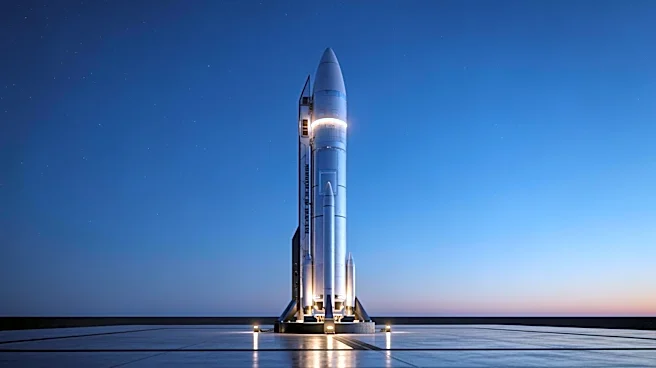
NASA is advancing its Artemis program with preparations for the Artemis 3 mission, scheduled for 2027. The first stage of the Artemis 3 Space Launch System (SLS) rocket has been positioned vertically in the Vehicle
Assembly Building at Kennedy Space Center, Florida. This stage will soon be integrated with its engine section. The Artemis 3 mission aims to test lunar landers in Earth's orbit, a shift from its initial plan to conduct a crewed lunar landing. This change is due to delays in the development of the Human Landing System, which includes SpaceX's Starship and Blue Origin's Blue Moon landers. The Artemis program's long-term goal is to establish a permanent base at the lunar south pole by the early 2030s.
Why It's Important?
The Artemis 3 mission is a critical step in NASA's broader strategy to return humans to the moon and establish a sustainable presence there. By testing lunar landers in Earth's orbit, NASA aims to ensure the safety and reliability of these systems before attempting a crewed lunar landing. This approach reflects NASA's commitment to mitigating risks associated with human spaceflight. The success of Artemis 3 could pave the way for future missions, including Artemis 4, which is planned as the first crewed moon landing of the program. The development and testing of these technologies are crucial for the U.S. to maintain its leadership in space exploration and foster international partnerships.
What's Next?
Following the integration of the SLS rocket's components, NASA will conduct further tests to ensure the readiness of the Artemis 3 mission. The agency will also continue to monitor the progress of the Human Landing System contractors, SpaceX and Blue Origin, as they work to meet the necessary qualifications for lunar landings. The outcome of these developments will influence the timeline and execution of subsequent Artemis missions, including the anticipated crewed lunar landing with Artemis 4 in 2028.