
What's Happening?
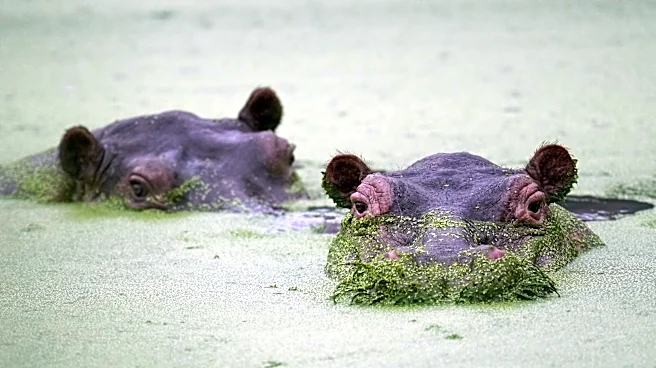
Anant Ambani, son of Indian billionaire Mukesh Ambani, has offered to relocate the so-called 'cocaine hippos' from Colombia to his Vantara animal center in India. These hippos are descendants of those
originally brought to Colombia by drug lord Pablo Escobar in the 1980s. Following Escobar's death, the hippos have thrived in Colombia's Magdalena River, causing ecological disruption and posing threats to local fishermen. The Colombian government has considered culling the hippos, which are now classified as an invasive species. Ambani's proposal includes a veterinary-led capture and transport of the 80 hippos to a specially designed habitat at Vantara, which is already home to a large number of diverse animal species.
Why It's Important?
The relocation proposal by Anant Ambani highlights the ongoing challenges of managing invasive species and the ethical considerations involved in wildlife conservation. The hippos have become a significant ecological concern in Colombia, affecting local ecosystems and species. Ambani's offer presents a potential solution that avoids culling, aligning with animal welfare perspectives that oppose lethal measures. This development also underscores the global nature of wildlife management issues and the role of private entities in conservation efforts. The financial implications are notable, as the cost of relocating the hippos is estimated at $3.5 million, a significant investment in conservation.
What's Next?
If the Colombian government accepts Ambani's proposal, the next steps would involve detailed planning for the safe capture and transport of the hippos. This would require coordination between Colombian authorities and the Vantara animal center to ensure the animals' welfare during the relocation process. The proposal may also prompt discussions among international conservation groups and governments about best practices for managing invasive species. Additionally, the outcome could influence future policies on wildlife management and conservation funding.
Beyond the Headlines
The situation with the 'cocaine hippos' raises broader questions about the legacy of human intervention in natural ecosystems and the responsibilities of current generations to address these impacts. The ethical debate over culling versus relocation reflects larger societal values regarding animal rights and conservation priorities. Furthermore, the involvement of a private entity like Vantara in such a high-profile conservation effort could set a precedent for future collaborations between governments and private organizations in addressing global environmental challenges.