





What's Happening?
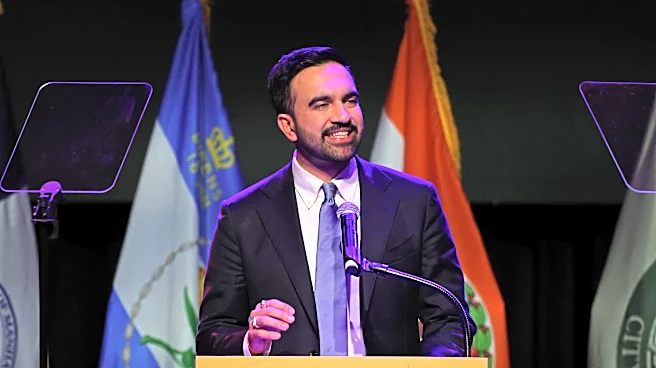
New York City is set to launch a public grocery initiative aimed at reducing food costs for residents. This initiative, led by Mayor Zohran Mamdani, involves the creation of publicly funded grocery stores operated by private retailers. These stores will
offer core basket items such as fresh produce, milk, and eggs at a 30% discount, with prices fixed for a month. The initiative is designed to improve food affordability amid rising grocery prices, which have increased by more than a third since 2020. The program is expected to save shoppers approximately $90 a month, or $1,000 annually, regardless of income level. The city has approved $70 million in capital funding for the project, which is part of a broader effort to address food insecurity affecting 1.5 million New Yorkers.
Why It's Important?
The initiative represents a significant shift in how cities can address food affordability and insecurity. By subsidizing essential food items, the program aims to alleviate financial pressure on low-income families and those relying on nutrition assistance programs like SNAP and WIC. This model could serve as a blueprint for other cities facing similar challenges. However, it raises questions for consumer packaged goods (CPG) brands about pricing strategies and market competition. The initiative could potentially disrupt traditional retail models by offering lower prices on essential goods, which may impact local grocers and bodegas. The program's success could influence public policy and encourage other municipalities to adopt similar measures to combat food insecurity.
What's Next?
The city has issued a request for proposals from qualified grocers to manage the municipal stores, with the first locations expected to open by 2029. As the initiative progresses, stakeholders will be watching to see how the subsidy model affects local businesses and whether it can sustainably provide affordable food options. There is also potential for the program to expand its focus to include values-based purchasing frameworks that prioritize labor standards and environmental sustainability. The initiative's impact on local retailers and its ability to maintain affordability without compromising quality will be key factors in its long-term viability.
Beyond the Headlines
The public grocery initiative highlights broader societal issues such as food justice and economic inequality. By prioritizing affordability, the program seeks to address systemic barriers that prevent access to healthy food. However, it also raises ethical considerations about the role of government in market dynamics and the potential for unintended consequences, such as reduced business for local retailers. The initiative's focus on fresh, healthy foods aligns with public health goals, but its exclusion of ultra-processed foods may spark debates about consumer choice and dietary freedom.