







What's Happening?
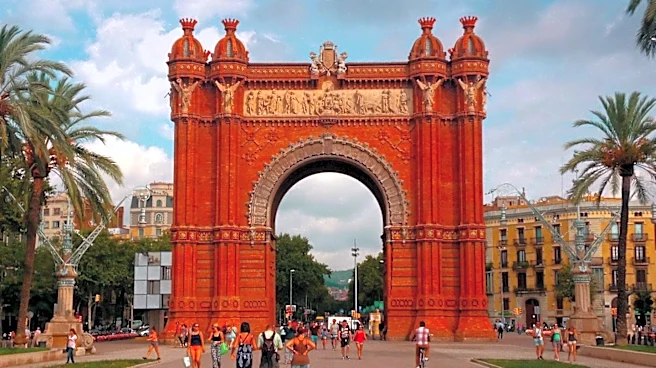
Barcelona is taking steps to address the issue of overtourism, which has been affecting the quality of life for its residents. The city's new commissioner for sustainable tourism, José Antonio Donaire, has introduced the 'not one tourist more' plan. This
initiative aims to manage the influx of approximately 16 million annual visitors, which is significantly higher than the city's population. The plan focuses on improving residential life in areas most impacted by tourism, such as La Rambla, where locals have stopped visiting due to overcrowding. Measures include limiting accommodation options and increasing taxes on cruise ships to deter short-term visitors. The city is not anti-tourist but prioritizes the rights of its citizens to live comfortably.
Why It's Important?
The 'not one tourist more' plan is significant as it highlights the growing global issue of overtourism and its impact on local communities. For Barcelona, tourism accounts for 13% of its revenue, yet the city is prioritizing the well-being of its residents over economic gains. This move could set a precedent for other popular tourist destinations facing similar challenges. By managing tourist numbers and focusing on sustainable tourism, Barcelona aims to balance economic benefits with quality of life for its citizens. The plan could influence tourism policies worldwide, encouraging other cities to adopt similar strategies to protect their cultural and social environments.
What's Next?
Barcelona's approach to managing tourism will likely involve ongoing adjustments and monitoring. The city plans to continue promoting business and cultural travel to diversify its tourist base. Additionally, the effectiveness of increased taxes and accommodation limits will be evaluated to ensure they meet the city's goals. Stakeholders, including local businesses and residents, will play a crucial role in shaping future policies. The success of this initiative could lead to further regulatory changes and inspire other cities to implement similar measures to address overtourism.