




What's Happening?
On November 5, 2026, Ecuadorian President Daniel Noboa signed Executive Decree 529, enabling financial institutions to temporarily defer credit payments for individuals impacted by the El Niño phenomenon. This measure aims to provide economic relief to debtors
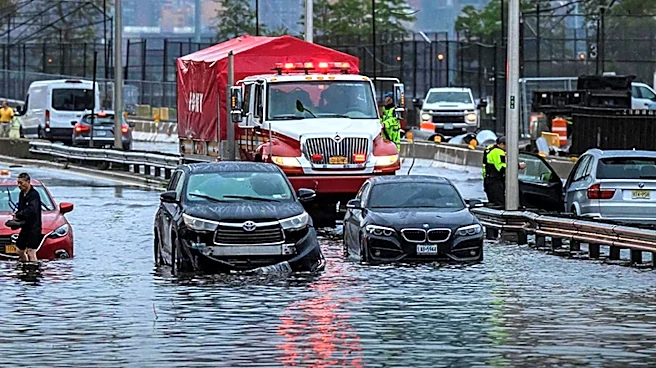
facing difficulties due to the severe weather conditions, including heavy rains and floods. The deferment period can last up to 90 days, during which outstanding installments can be moved to the end of the amortization schedule. The decree specifies that this is not an automatic application; banks must consider the decree's conditions and obtain the debtor's consent. The Junta de Política y Regulación Financiera y Monetaria has a 15-day window from the decree's publication to issue the necessary regulations for its implementation. The government anticipates that El Niño could disrupt production and supply chains, damage infrastructure, and increase logistical costs, leading to reduced income for affected households and businesses.
Why It's Important?
This executive decree is a critical intervention designed to mitigate the economic fallout from the El Niño phenomenon in Ecuador. By allowing credit payment deferrals, the government aims to prevent widespread defaults and financial distress among its citizens and businesses. The measure acknowledges the potential for significant economic disruption, including impacts on agricultural production, supply chain stability, and infrastructure integrity. For affected individuals and small businesses, this deferment offers a crucial lifeline, potentially preventing bankruptcies and preserving livelihoods. The involvement of Asobanca (Association of Private Banks of Ecuador) in preparing alternative credit solutions, such as refinancing and restructuring, further underscores the banking sector's role in supporting economic stability during this environmental crisis. The proactive stance by the government and financial institutions highlights a concerted effort to safeguard the national economy against climate-induced shocks.
What's Next?
The Junta de Política y Regulación Financiera y Monetaria is mandated to issue the specific regulations for implementing the credit deferment within 15 days of the decree's publication. Following this, financial institutions, including public and private banks and popular and solidarity financial sector entities, will begin processing deferment requests. Debtors affected by El Niño will need to apply for this relief, and banks will evaluate each request based on the established conditions. Asobanca has indicated that banks are already conducting preventive analyses in high-risk areas to identify vulnerable households and productive sectors. The focus will be on offering tailored solutions like refinancing and restructuring to help clients manage their obligations. The effectiveness of this measure will depend on the swift and coordinated action of regulatory bodies and financial institutions, as well as the active participation of affected debtors.
Beyond the Headlines
The implementation of Executive Decree 529 reflects a growing recognition of climate change's direct economic consequences and the need for adaptive financial policies. This move could set a precedent for how governments and financial sectors respond to future climate-related disasters, emphasizing proactive measures over reactive aid. The requirement for individual consent and bank approval, rather than automatic deferral, highlights a balance between providing relief and maintaining financial system stability. It also underscores the importance of robust risk assessment and preparedness within the banking sector for environmental events. The broader implication is a shift towards integrating climate risk into financial planning and regulation, potentially influencing lending practices, insurance products, and disaster recovery frameworks in other vulnerable regions globally.