






What's Happening?
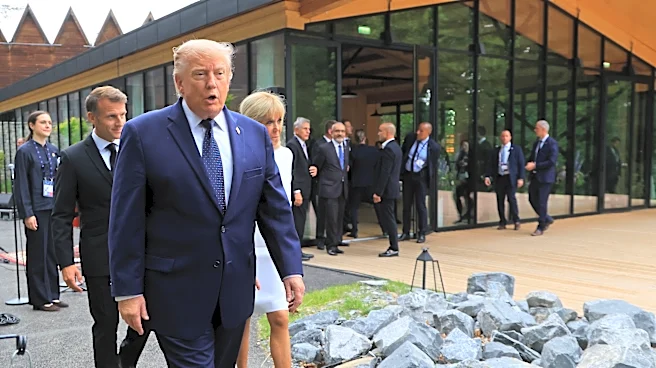
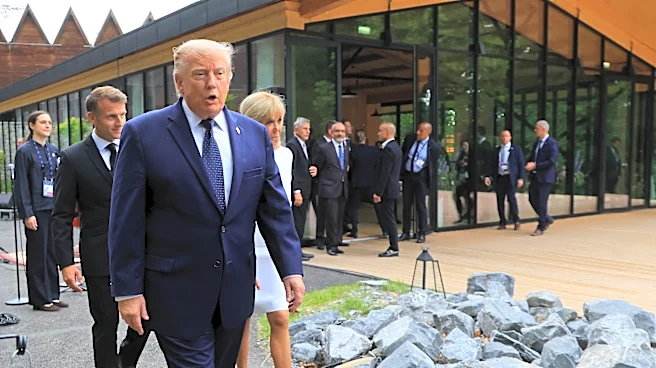
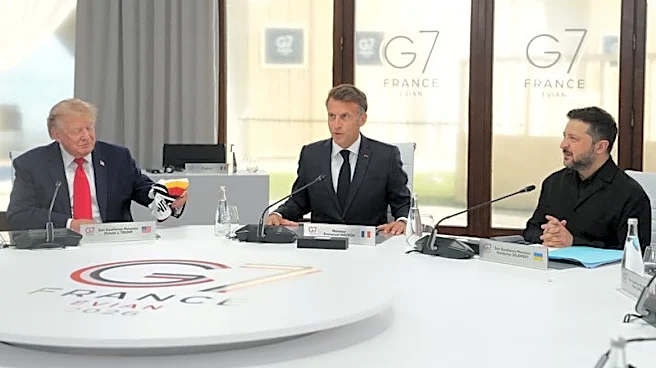
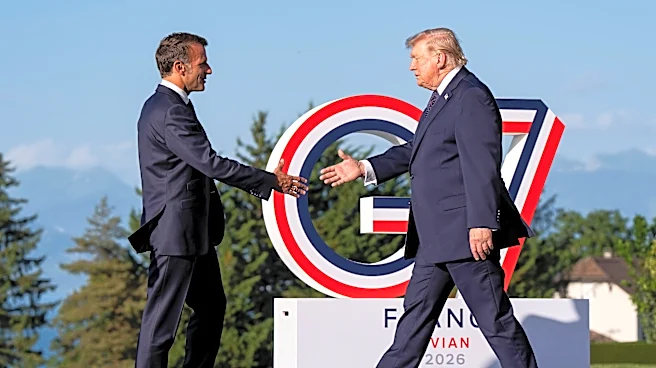
French President Emmanuel Macron successfully hosted U.S. President Donald Trump at the Palace of Versailles during the G7 summit, where significant diplomatic strides were made. Macron's efforts culminated in Trump signing an initial deal to end the Iran
war, a move that surprised many attendees. Additionally, Macron managed to secure Trump's more forceful support for Ukraine in its conflict with Russia, marking a diplomatic win for European leaders and Ukrainian President Volodymyr Zelenskyy. The summit also resulted in a joint declaration on Ukraine and stronger sanctions against Russia, targeting its oil and gas sectors. Macron's use of Versailles as a diplomatic tool was seen as a strategic move to align Trump more closely with European perspectives.
Why It's Important?
The developments at the G7 summit signify a potential shift in U.S. foreign policy under President Trump, aligning more closely with European views on key international issues. This alignment could lead to increased support for Ukraine, both militarily and diplomatically, as it continues to face aggression from Russia. The signing of the Iran deal at Versailles also suggests a possible de-escalation in the Middle East, which could stabilize oil prices and impact global markets. Macron's success in influencing Trump highlights the importance of diplomatic engagement and the role of historical venues like Versailles in international relations.
What's Next?
Following the G7 summit, the focus will likely shift to the implementation of the agreements reached, particularly the sanctions against Russia and the support for Ukraine. European leaders may continue to engage with the U.S. to ensure sustained support for Ukraine and to monitor the impact of the Iran deal on regional stability. The outcomes of the summit could also influence upcoming diplomatic engagements and negotiations, particularly those involving NATO and other international alliances.