






What's Happening?
Social media platforms like Facebook, TikTok, and YouTube are seeing a surge in content promoting the idea that a rare 1982 penny could be worth thousands of dollars. These influencers claim that a specific 1982-D Small Date copper cent from the Denver
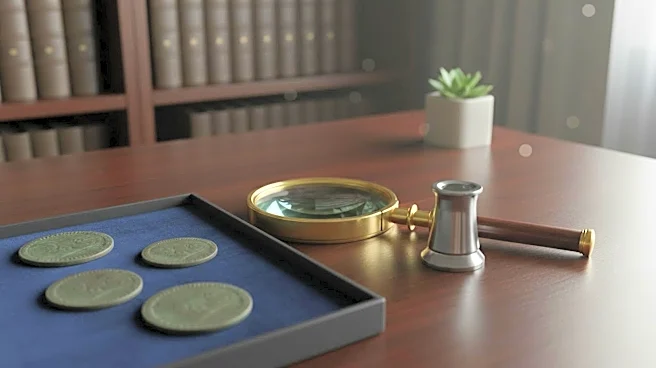
mint, valued between $18,000 and $25,000, can be found in everyday pocket change. However, experts like Michael Bugeja, professor emeritus at Iowa State University and former member of the Citizens Coinage Advisory Committee of the U.S. Treasury Department, state that only two such coins have been found in the past 40 years, in 2016 and 2019. The rarity stems from a transitional error in 1982 when the U.S. Mint switched from copper to zinc for pennies. During this period, a few copper coins were mistakenly minted with newer, smaller date dies. The key identifiers for this rare coin are its 'D' mintmark, a small date, and a weight of 3.1 grams, distinguishing it from the more common 2.5-gram zinc pennies and other copper varieties.
Why It's Important?
The proliferation of misleading information on social media regarding the 1982-D Small Date penny creates false hope among amateur collectors and can lead to financial exploitation. Online hustlers are leveraging this narrative to sell common pennies at inflated prices, preying on individuals unaware of the specific characteristics that define the rare coin. The U.S. Mint produced 10.7 billion pennies in 1982, making it easy to find a 1982 penny, but exceedingly difficult to find the rare variant. This situation highlights the broader issue of misinformation in online communities, particularly concerning niche markets like coin collecting, where a lack of expert knowledge can make individuals vulnerable to scams. The emphasis on weight and specific date characteristics underscores the technical expertise required to identify genuine rarities, which is often overlooked in viral social media content.
What's Next?
As social media continues to be a primary source of information for many, the spread of misleading claims about valuable coins is likely to persist. Experts advise potential buyers to exercise extreme caution and avoid purchasing such coins from non-specialty sites like eBay, where authenticity cannot be guaranteed. Instead, they recommend consulting reputable auction houses such as GreatCollections, StacksBowers, or Heritage Auctions, and ensuring coins are sealed in holders by grading companies like the Numismatic Guaranty Company (NGC). The Anti-Counterfeiting Educational Foundation (ACEF) also provides a directory of vetted expert dealers. Without increased awareness and education, amateur collectors will remain susceptible to scams, potentially losing money on common coins misrepresented as valuable rarities.
Beyond the Headlines
This phenomenon extends beyond mere financial loss, touching upon the psychological impact of false hope and the erosion of trust in online information. The allure of a 'lottery win' from pocket change can be powerful, leading individuals to invest time and money based on inaccurate information. This trend also underscores the challenges faced by legitimate numismatists and coin dealers in combating misinformation that devalues their expertise and the integrity of the collecting hobby. The ease with which unverified claims can go viral on social media platforms poses a significant threat to consumer protection and highlights the need for greater digital literacy and critical thinking when engaging with online content, especially concerning financial opportunities.