







What's Happening?
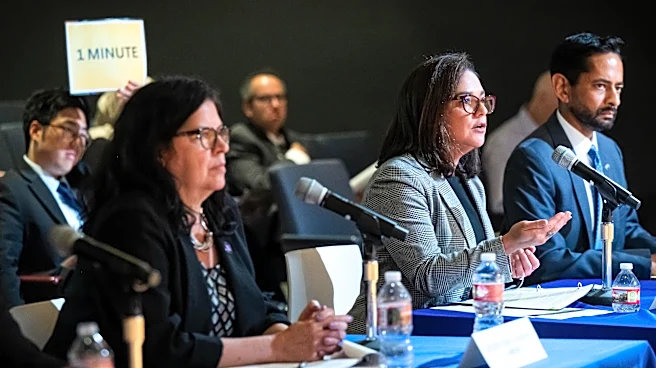
The San Jose City Council is currently debating whether to officially designate 'affordability' as a dedicated core focus area, alongside existing priorities like community safety and housing production. This discussion follows a special study session
that explored strategies to lower living costs in one of the nation's most unaffordable cities. San Jose residents face the highest essential household bills among the 50 largest U.S. cities, with housing and childcare being the biggest expenses. Proposals discussed included boosting local wages, expanding public transit, and fast-tracking apartment approvals. While Councilmember Peter Ortiz strongly advocates for making affordability an official category, Mayor Matt Mahan suggests embedding affordability across all existing city departments rather than creating a separate focus area. A decision on this matter is expected early next year.
Why It's Important?
The debate over making affordability a core focus area is crucial for San Jose residents grappling with exorbitant living costs. Officially designating affordability as a priority would establish clear metrics and budget allocations, holding the city council accountable for tangible improvements. Without this, critics argue, affordability might remain a secondary consideration, overshadowed by other priorities. The high cost of living, particularly housing and childcare, impacts the economic stability and quality of life for a significant portion of the population, including moderate and above-average earners. Addressing this systematically could prevent further displacement of long-term residents and ensure that San Jose remains a viable place to live for its workforce, not just the wealthy. The outcome will shape the city's policy direction and resource allocation for years to come.
What's Next?
The San Jose City Council is expected to make a decision early next year on whether to officially adopt 'affordability' as a dedicated focus area. If approved, it would join existing priorities such as community safety, homelessness, neighborhood cleanup, housing production, and economic growth. This decision will likely influence future policy initiatives, budget allocations, and the city's approach to development. Councilmember Ortiz has proposed an affordability fund, financed by tax revenue from data centers, to subsidize families and seniors with rent, groceries, electricity, and childcare. The ongoing dialogue between council members and residents will be critical in shaping the final approach, with a strong emphasis on measurable outcomes and sustained commitment to addressing the affordability crisis.
Beyond the Headlines
The affordability crisis in San Jose is a microcosm of a larger national issue, particularly in high-tech hubs where economic prosperity often exacerbates income inequality and cost of living. This debate highlights the tension between fostering economic growth and ensuring equitable access to basic necessities for all residents. The discussion also touches upon the philosophical differences in governance: whether to tackle a pervasive issue like affordability through a dedicated, targeted approach or by integrating it into all existing policy frameworks. The outcome in San Jose could serve as a case study for other cities facing similar challenges, demonstrating effective strategies or highlighting pitfalls in addressing systemic affordability issues in a rapidly evolving economic landscape.