
What's Happening?
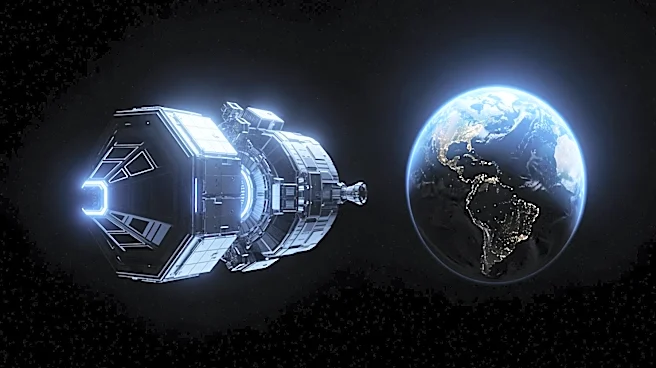
NASA's Artemis II mission, which recently completed a lunar flyby, encountered a helium leak in the European Service Module's propulsion system. The leak was found to be ten times worse than anticipated,
but NASA officials have assured that it poses no risk to the crew or the reentry sequence. The leak was identified before the launch, and similar issues were noted during the uncrewed Artemis I mission in 2022. Despite the leak, the mission proceeded as planned, utilizing a 'free return trajectory' that required minimal propulsion. NASA plans to redesign the valve system for the Artemis IV mission, which will require full system pressurization for lunar orbit insertion.
Why It's Important?
The helium leak in the Artemis II mission highlights the challenges of space exploration and the need for robust engineering solutions. Addressing such issues is crucial for ensuring the safety and success of future missions, particularly those involving human crews. The data gathered from the Artemis II mission will inform the redesign of the propulsion system, enhancing the reliability of future missions. This incident underscores the importance of thorough testing and validation of spacecraft systems to prevent potential failures during critical mission phases.
What's Next?
NASA is planning the Artemis III mission, which will focus on testing rendezvous and docking capabilities in low Earth orbit. The mission will not travel to the Moon, as initially planned, but will instead prepare for future lunar landings. The redesign of the helium valve system will be a priority for the Artemis IV mission, which aims to land humans on the Moon. NASA will continue to analyze the data from Artemis II to improve spacecraft systems and ensure the success of upcoming missions.