
What's Happening?
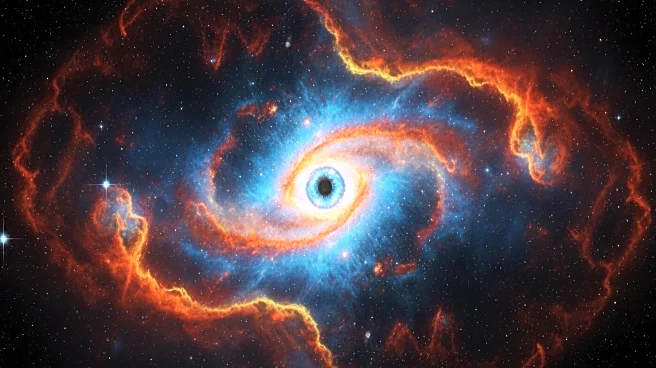
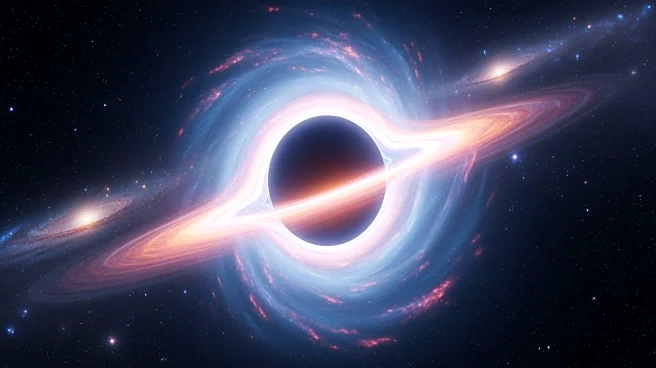
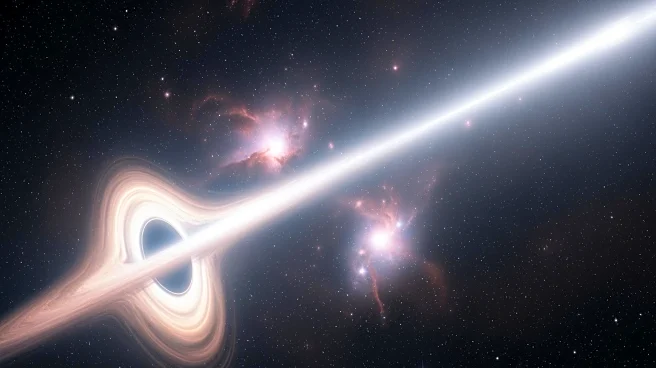
A recent study led by astronomer Vadim Rusakov proposes a new model for the formation of supermassive black holes, suggesting they undergo a 'cocoon' stage. This stage involves the black holes being enveloped in a dense shell of ionized gas, which feeds
them and obscures their x-ray emissions. This theory offers an explanation for the 'Little Red Dots' observed by the James Webb Space Telescope, which appear as extremely bright and dense objects from the early universe. The study challenges previous assumptions about the mass and formation of these black holes, suggesting they are less massive than previously thought.
Why It's Important?
Understanding the formation of supermassive black holes is crucial for comprehending the early universe's evolution. This new model could reshape current astrophysical theories and provide insights into the lifecycle of galaxies. By explaining the 'Little Red Dots,' the study addresses a significant mystery in astronomy, potentially altering how scientists view the relationship between black holes and galaxy formation. This research could lead to further investigations into the early universe, enhancing our knowledge of cosmic history and the fundamental processes that shape it.