



What's Happening?
The New York State Energy Planning Board has approved a new State Energy Plan that includes nuclear power as a key component in achieving the state's 2040 clean energy targets. The plan, developed by the New York State Energy Research and Development
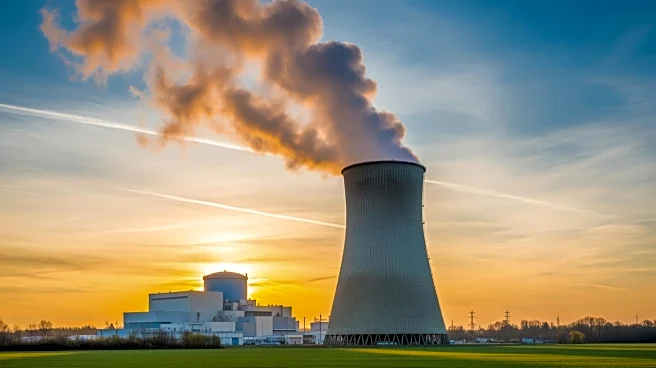
Authority (NYSERDA), suggests that incorporating nuclear energy could make it easier and less expensive to meet these goals. The modeling indicates that adding between 2.2 GW and 4.4 GW of new nuclear capacity could save the state an estimated $26 billion by 2040. This approach would also reduce the need for additional infrastructure, lowering the required generation and storage capacity significantly. The plan emphasizes the importance of nuclear energy in providing zero-carbon, firm, and dispatchable power, complementing renewable sources.
Why It's Important?
The inclusion of nuclear power in New York's energy plan underscores its potential to play a significant role in the state's decarbonization efforts. As New York aims to meet its ambitious climate goals, nuclear energy offers a reliable and low-carbon alternative to intermittent renewable sources. The plan's findings could influence energy policy and investment decisions, encouraging the development of nuclear infrastructure alongside renewables. This approach could lead to cost savings for ratepayers and taxpayers, while also addressing the challenges of energy transition and infrastructure development. The success of this strategy could serve as a model for other states and regions seeking to balance clean energy goals with economic and environmental considerations.
What's Next?
New York's energy plan calls for the rapid scaling of nuclear energy, alongside renewables, storage, and transmission infrastructure. The state must establish mechanisms to manage project development risks and provide financial support to lower investment hurdles. Building additional transmission capacity is critical to deliver nuclear-generated power to areas of high demand. As New York moves forward, the state will need to address challenges related to nuclear supply chain development and financing. The plan's implementation will require coordinated efforts from policymakers, industry stakeholders, and communities to ensure the successful integration of nuclear power into the state's energy mix.