





What's Happening?
The United Arab Emirates (UAE) is progressing with its space ambitions as Sirb-1, the nation's first synthetic aperture radar (SAR) satellite, has successfully passed its Critical Design Review (CDR). This milestone signifies that the satellite's design
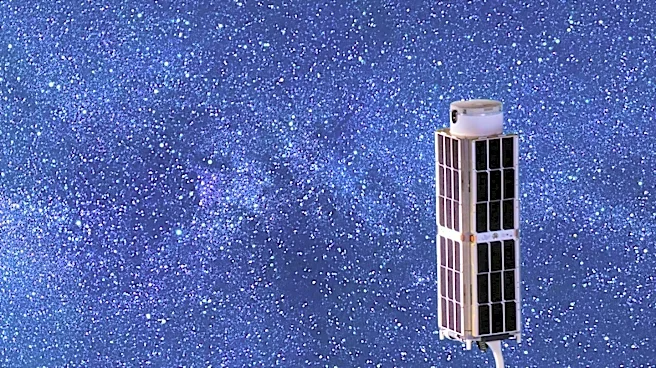
has been fully reviewed and approved, allowing engineers to move forward with manufacturing, assembly, and testing phases. Sirb-1 is an Earth-observation satellite designed to utilize radar technology to capture detailed images of the planet. Unlike traditional optical cameras, SAR technology can collect data at night and penetrate cloud cover, haze, and dust by emitting its own radar signals and measuring the reflections. This capability will enable continuous monitoring of various Earth-based activities and environmental changes. The project is spearheaded by the UAE Space Agency, with EDGE Group’s FADA serving as the primary contractor. Other key contributors include the Technology Innovation Institute (TII) and Orbitworks, highlighting a collaborative effort among UAE-based entities.
Why It's Important?
The development of Sirb-1 is a significant step for the UAE in establishing a robust, home-grown space industry. This initiative aims to cultivate local expertise, technology, and manufacturing capabilities in designing and producing advanced spacecraft. The ability to independently build and operate SAR satellites will provide the UAE with critical data for various applications, including monitoring shipping movements, tracking infrastructure changes, supporting agricultural planning, observing environmental shifts, and aiding in natural disaster response. This technological independence reduces reliance on foreign satellite data and enhances national security and economic diversification. Furthermore, Sirb-1 is intended to be the inaugural satellite in a larger constellation, which would allow for more frequent and comprehensive Earth observation, creating commercial opportunities for selling satellite data to global governments and businesses in sectors like energy, shipping, insurance, construction, and agriculture.
What's Next?
Following the successful Critical Design Review, the immediate next steps for the Sirb-1 project involve the manufacturing of its components, the assembly of the satellite, and rigorous testing of its systems. These stages are crucial to ensure that all functionalities operate as intended before the satellite is prepared for launch. The target launch date for Sirb-1 is set for 2028. Beyond the initial launch, the UAE plans to expand this project into a wider constellation of SAR satellites. This expansion will enable the country to gather more frequent and detailed information about Earth, further solidifying its position in the global space industry. The success of Sirb-1 will also pave the way for future advancements in the UAE's space technology and its commercial applications.
Beyond the Headlines
The Sirb-1 project represents a strategic shift for the UAE from primarily space exploration, exemplified by its Mars mission, to developing practical, Earth-focused satellite technology. This move underscores a broader national ambition to become a leader in advanced technological manufacturing and data services. The investment in SAR technology highlights a commitment to innovation that addresses real-world challenges, such as climate change monitoring and resource management, which are critical for sustainable development. Ethically, the enhanced surveillance capabilities of SAR satellites raise considerations regarding data privacy and the responsible use of Earth observation data. Legally, the development of a domestic space industry will necessitate robust regulatory frameworks for satellite operations, data ownership, and international cooperation. Culturally, this project fosters a scientific and technological mindset within the UAE, inspiring future generations to pursue careers in STEM fields and contributing to a knowledge-based economy.