






What's Happening?
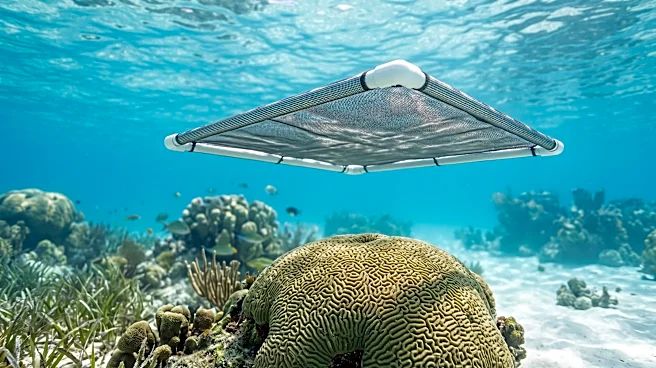
Scientists in Florida are employing underwater umbrellas to mitigate the impact of marine heatwaves on coral reefs. This initiative follows a record-breaking marine heatwave in the Florida Keys in 2023, which severely damaged branching corals. The research,
led by Karen Neely of Nova Southeastern University, involved deploying floating shades made from PVC frames and nylon mesh approximately 30 centimeters above brain coral colonies in the lower Florida Keys. These shades are designed to reduce intense sunlight and ultraviolet radiation, which exacerbate coral bleaching. The study monitored 40 coral colonies, half shaded and half exposed, from July to November 2024. Despite 2024 experiencing the second-highest level of heat stress since 1985, shaded corals began to regain color after the umbrellas were installed, while exposed corals became paler. This method offers temporary protection for vulnerable corals during periods of extreme heat.
Why It's Important?
The use of underwater umbrellas represents a significant, albeit temporary, strategy in the ongoing effort to protect vital U.S. coral reef ecosystems. Coral reefs, such as those in Florida, are crucial for marine biodiversity, providing habitat and food for a quarter of all marine species, including many commercially important fish. They also serve as natural barriers, protecting coastlines from storms and erosion. The increasing frequency and intensity of marine heatwaves, with bleaching events now occurring every five to six years globally, pose a severe threat to these ecosystems. The decline in hard coral cover, which saw an 8.9 percent global reduction between 2023 and 2024, underscores the urgency of finding effective conservation methods. While not a permanent solution, this shading technique offers a localized intervention to safeguard specific coral colonies, buying time for broader climate change mitigation efforts to take effect and preserving critical marine habitats.
What's Next?
The researchers emphasize that while effective for targeted corals, scaling this shading method to cover entire reefs is impractical. Therefore, the focus will likely remain on using these underwater umbrellas to protect particularly vulnerable or ecologically significant coral colonies during extreme heat events. Future efforts will involve refining the technology and identifying optimal deployment strategies to maximize their protective benefits. The long-term viability of coral reefs, however, ultimately depends on global efforts to limit the warming of the seas. This includes continued research into other protective measures and, more critically, international cooperation on climate change policies to reduce greenhouse gas emissions. The scientific community will continue to monitor the effectiveness of these temporary solutions while advocating for comprehensive climate action to ensure the survival of these critical marine environments.
Beyond the Headlines
The development of underwater umbrellas highlights the growing need for innovative, localized interventions to combat the immediate effects of climate change on natural ecosystems. While these solutions offer a glimmer of hope for specific areas, they also underscore the broader ethical and environmental challenges. The reliance on such interventions points to the limitations of current global climate policies and the increasing pressure on scientists to find stopgap measures. This approach raises questions about resource allocation in conservation, balancing immediate protection with long-term systemic change. The Florida study also brings to light the interconnectedness of global climate patterns and local ecological health, demonstrating how global sea temperature records directly impact regional marine life. It serves as a stark reminder that without significant reductions in global warming, even the most ingenious local solutions will only offer temporary relief to ecosystems facing existential threats.