





What's Happening?
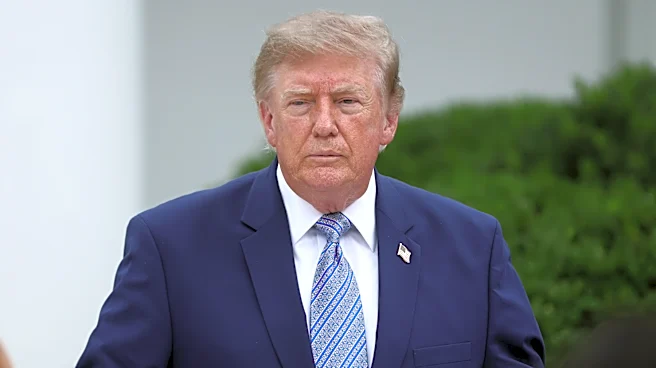
President Trump is reportedly working on a significant deal to import potash from Belarus, an Eastern European nation with close ties to Russia. This move is seen as an effort to undermine Canada's position in the potash market amidst an ongoing continental
trade dispute. The announcement comes as the Canadian Parliament reconvenes, with Prime Minister Mark Carney's government introducing new legislation aimed at reducing labor disruptions and accelerating project approvals. These legislative changes partially dismantle policies previously implemented under former Liberal prime minister Justin Trudeau, which had faced criticism from the energy sector and the governments of Alberta and Saskatchewan. The proposed Belarusian potash deal highlights the complex and shifting dynamics of international trade relations, particularly concerning key commodities.
Why It's Important?
This potential deal holds significant implications for the U.S. and North American trade landscape. By seeking potash from Belarus, President Trump aims to diversify supply chains and potentially reduce reliance on Canadian imports, which could impact the Canadian economy and its potash industry. The move could intensify existing trade tensions between the U.S. and Canada, potentially leading to further retaliatory measures or shifts in trade policies. For the U.S., securing a new source of potash, a crucial agricultural fertilizer, could be seen as a strategic move to ensure supply stability and potentially influence global commodity prices. However, engaging with Belarus, a country described as a dictatorship closely allied with Russia, could also raise geopolitical and ethical concerns, potentially drawing criticism from human rights advocates and international allies. The deal underscores the U.S. administration's willingness to leverage trade as a tool in broader geopolitical strategies.
What's Next?
The immediate next steps will likely involve negotiations and formalization of the 'massive deal' between the U.S. and Belarus. This process will be closely watched by the Canadian government and industry stakeholders, who may explore countermeasures or diplomatic efforts to mitigate the impact on their potash sector. The Canadian Labour Congress has already expressed concerns about new domestic legislation that could limit bargaining power, indicating potential internal challenges for Prime Minister Carney's government. Internationally, the deal could prompt reactions from other major potash-producing nations and global trade organizations. The U.S. administration will need to navigate potential criticism regarding its engagement with Belarus, while also demonstrating the economic benefits of the agreement. The broader continental trade war context suggests that this potash deal could be one of several strategic moves in an evolving economic and political landscape.
Beyond the Headlines
The pursuit of Belarusian potash by the U.S. extends beyond simple trade economics, touching upon deeper geopolitical and ethical considerations. The decision to engage with a nation described as a dictatorship and a close ally of Russia could signal a shift in U.S. foreign policy priorities, where economic interests may be prioritized over traditional alliances or human rights concerns. This could set a precedent for future U.S. trade relationships, potentially impacting how the U.S. interacts with other non-democratic regimes. Furthermore, the move highlights the increasing weaponization of trade in international relations, where essential commodities like potash become leverage in broader political and economic contests. The long-term implications could include a re-evaluation of global supply chain resilience, the ethics of sourcing from authoritarian states, and the potential for increased fragmentation in international trade alliances.