








What's Happening?
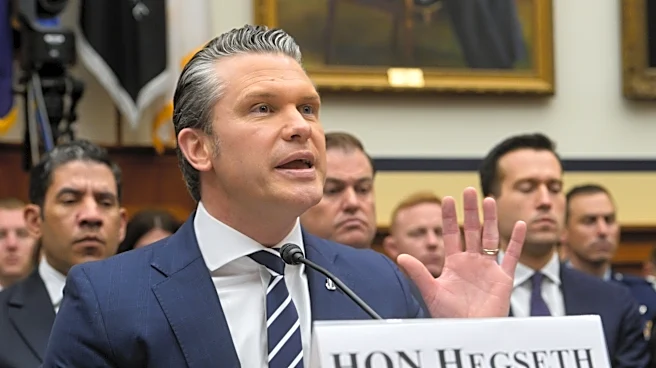
Jennifer Rauchet, wife of U.S. Secretary of Defense Pete Hegseth, attended the White House Correspondents' Dinner wearing a dress reportedly similar to one sold on Shein, a Chinese fast-fashion retailer. This choice has sparked significant backlash due
to the perceived contradiction between Hegseth's nationalist ideologies and the use of a product from a Chinese company. The controversy was amplified by social media, with influencer Ella Devi highlighting the dress's origin, and fashion watchdog Diet Prada criticizing the choice. The incident has reignited debates over the ethics of fast fashion, especially in political circles where clothing choices are often scrutinized for their symbolic value.
Why It's Important?
The incident underscores the ongoing tension between political ideologies and personal choices, particularly in the realm of fashion. It highlights the complexities of fast fashion, which is often criticized for its environmental impact and labor practices. The choice of a fast-fashion dress by someone associated with nationalist policies raises questions about the consistency of political messaging. This situation also reflects broader societal debates about consumer responsibility and the ethical implications of purchasing decisions. The backlash illustrates how fashion can be a powerful tool for political expression and critique, influencing public perception and sparking discussions on national and international trade relations.
What's Next?
The controversy may lead to increased scrutiny of public figures' fashion choices, particularly those in political circles. It could also prompt discussions about the ethical responsibilities of consumers, especially those in influential positions. As the debate over fast fashion continues, there may be calls for greater transparency in the fashion industry and more sustainable practices. Political figures might face pressure to align their personal choices with their public policies, potentially influencing future decisions regarding trade and consumer goods.
Beyond the Headlines
This incident highlights the broader issue of how fashion is used as a political tool and the ethical considerations it raises. The debate over Rauchet's dress choice reflects a larger cultural shift towards questioning the sustainability and ethics of consumer goods. It also points to the potential for fashion to serve as a platform for political and social commentary, challenging individuals and institutions to consider the implications of their choices. The situation may encourage a reevaluation of how fashion intersects with politics, ethics, and global trade.