
What's Happening?
Estonia's foreign minister, Margus Tsahkna, has raised concerns about a potential threat from Russia, suggesting that President Vladimir Putin may send former soldiers to Europe to engage in hybrid warfare
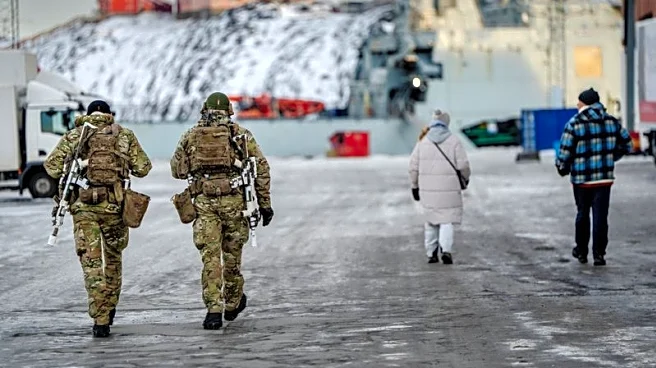
following any ceasefire in Ukraine. Tsahkna has proposed a ban on Russian soldiers who fought in Ukraine from entering the European Union's Schengen free-travel zone. This move is in response to fears that these individuals, described as 'ex-prisoners and rapists,' could be used to destabilize Europe. Estonia has already imposed a ban on 261 ex-combatants, citing concerns over criminal activities by former service personnel. The proposal has received positive feedback from EU colleagues, and discussions are ongoing about implementing an EU-wide ban.
Why It's Important?
The potential deployment of former Russian soldiers to Europe poses a significant security risk, as these individuals could be used to conduct sabotage and other destabilizing activities. This threat underscores the need for heightened vigilance and cooperation among European nations to counteract Russian aggression. The proposal for a blanket ban on these individuals highlights the urgency of addressing this issue to protect European security and stability. The situation also emphasizes the importance of international collaboration in countering hybrid warfare tactics, which blend conventional military operations with cyber attacks and other unconventional methods.
What's Next?
The European Union is considering implementing a blanket ban on former Russian combatants from entering the Schengen zone. Estonia is actively sharing intelligence with EU countries to prevent these individuals from entering Europe. The proposal may be discussed at the next EU meeting in Brussels, where prime ministers and presidents could provide political guidance. The UK, although not part of the Schengen zone, is also collaborating with EU countries to enhance border security and prevent potential threats. The situation requires swift action to ensure Europe is prepared for any potential security challenges.