






What's Happening?
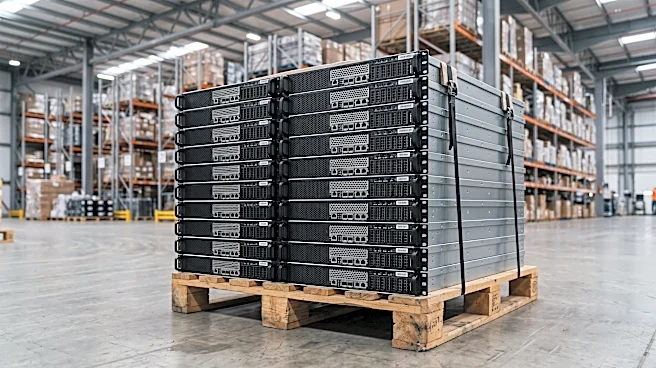
Taiwanese prosecutors have indicted nine individuals, including an Nvidia senior manager and two Super Micro employees, for allegedly orchestrating the illegal export of advanced AI servers equipped with B300 graphics processing units (GPUs) to mainland
China. These exports violate U.S. restrictions on the sale of high-end AI chips to China, which have been in place since 2022 and tightened in subsequent years. The scheme involved creating false end-user documents stating the servers would be installed in Taiwan, and utilizing transshipment routes through Indonesia, Japan, and Hong Kong to deliver 74 servers to Chinese customers. An additional 56 servers were intercepted by Taiwanese customs officials. The indicted individuals face charges of breach of trust and document forgery, with prosecutors seeking maximum five-year sentences for four defendants, including the Nvidia manager identified as Chang, who is accused of authorizing the release of the B300 GPUs and demonstrating a poor attitude following the offense. Super Micro has stated it is cooperating with Taiwanese authorities and working to enhance its export compliance program.
Why It's Important?
This indictment underscores the ongoing tension and competition between the U.S. and China in the critical field of artificial intelligence and advanced semiconductor technology. The U.S. has implemented stringent export controls to prevent China from acquiring high-end AI chips that could bolster its military and technological capabilities. The alleged illegal exports, despite these controls, highlight the challenges in enforcing such restrictions and the potential for circumvention through complex schemes involving multiple intermediaries and falsified documentation. The involvement of employees from major U.S.-linked tech companies like Nvidia and Super Micro raises concerns about internal compliance and the integrity of the supply chain for sensitive technologies. This situation could lead to increased scrutiny and potentially stricter enforcement measures from U.S. authorities, impacting global semiconductor trade and the operations of companies involved in AI infrastructure. It also emphasizes Taiwan's crucial role as a semiconductor powerhouse and its efforts to uphold international export control regimes.
What's Next?
The legal proceedings against the nine indicted individuals in Taiwan will continue, with prosecutors seeking significant penalties for those involved. Nvidia and Super Micro are expected to continue cooperating with Taiwanese authorities and may face internal investigations or further scrutiny regarding their compliance procedures. The U.S. government will likely monitor the outcome of these cases closely and could consider additional measures to strengthen export controls or enhance international cooperation to prevent similar circumventions. This incident may also prompt other countries involved in the semiconductor supply chain to review and tighten their own export control enforcement mechanisms. Furthermore, the ongoing competition for AI supremacy between the U.S. and China suggests that efforts to control the flow of advanced technology will remain a prominent feature of international relations and trade policy.
Beyond the Headlines
The illegal export of AI chips to China touches upon deeper implications beyond immediate legal and trade concerns. It highlights the ethical responsibilities of individuals and corporations in adhering to international regulations designed to prevent the misuse of advanced technology. The sophisticated methods used to bypass export controls, including the creation of fake websites and falsified information, reveal a determined effort to acquire these critical components, suggesting the high strategic value placed on AI capabilities. This incident could also influence the broader debate on technological sovereignty and the extent to which nations can effectively control the spread of dual-use technologies. The long-term impact could include a further decoupling of technological ecosystems between the U.S. and China, potentially leading to divergent AI development paths and standards, and increasing the complexity for global tech companies operating in both markets.