



What's Happening?
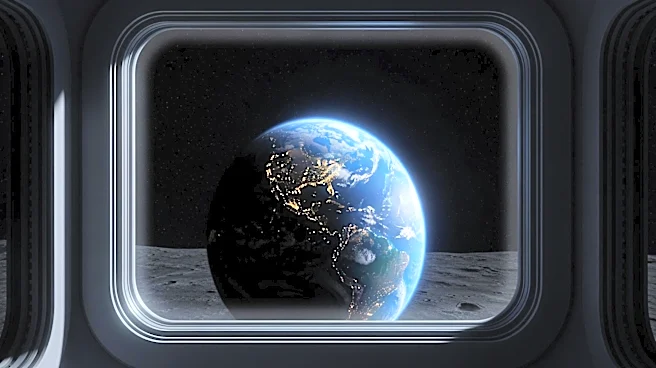
Reid Wiseman, the commander of the Artemis II mission, has shared a remarkable video capturing the Earth setting behind the Moon, a phenomenon known as Earthset. This event marks the first time human eyes have witnessed an Earthset in 54 years, since
the Apollo 17 mission. The video was filmed using an iPhone 17 Pro Max, while mission specialist Christina Koch took still images with a Nikon camera. The Artemis II crew traveled over 5,000 miles beyond the Moon, reaching more than a quarter of a million miles away from Earth, setting a record for the furthest humans have been from the planet.
Why It's Important?
The Artemis II mission represents a significant milestone in human space exploration, showcasing advancements in technology and the potential for future lunar and deep space missions. The ability to capture and share such phenomena as Earthset highlights the progress made since the Apollo missions, inspiring awe and interest in space exploration. This mission not only pushes the boundaries of human travel but also serves as a precursor to more ambitious projects, such as establishing a sustainable human presence on the Moon and eventually Mars. The video and images from the mission contribute to public engagement and support for continued investment in space exploration.
What's Next?
Following the success of the Artemis II mission, NASA and its partners are likely to focus on preparing for Artemis III, which aims to land astronauts on the lunar surface. This mission will further test technologies and strategies for long-term lunar habitation and exploration. The insights gained from Artemis II will inform future missions, including the development of lunar bases and the exploration of Mars. Stakeholders, including government agencies, private companies, and international partners, will continue to collaborate on advancing space exploration capabilities.
Beyond the Headlines
The Artemis II mission underscores the importance of international cooperation in space exploration, as it involves contributions from various countries and private entities. The mission also highlights the role of technology in enhancing human capabilities in space, with devices like smartphones and cameras playing crucial roles in documenting and sharing experiences. Additionally, the mission raises ethical considerations regarding the environmental impact of space travel and the need for sustainable practices as humanity expands its presence beyond Earth.